
Poland’s top court fell into open turmoil after a judge claimed control and police ringed the building, triggering rival “coup” and “rule of law” claims from national leaders.
Story Snapshot
- A Constitutional Tribunal judge announced the suspension of the court’s leaders and said she took interim control.
- The Tribunal’s official account called it a “coup d’état” and said the president remained in charge.
- Police surrounded the court amid clashes and security concerns as protesters gathered.
- Poland’s president turned his plane around mid-trip as government and opposition traded charges.
What set off the crisis at Poland’s top court
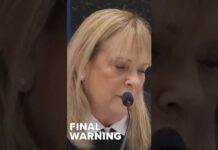
On October 30, Judge Anna Korwin-Piotrowska announced a one-month suspension of Constitutional Tribunal President Bogdan Święczkowski and Vice-President Bartłomiej Sochański, and said she would lead the court in the interim. The move followed months of fights over who counts as a lawfully seated judge. Government allies said she had seniority to act. Tribunal communications loyal to Święczkowski said she was not sworn in by the president, so she lacked authority to do anything. The core dispute is legal status, not just politics.
The court’s official channels called the takeover a “coup d’état” and insisted Święczkowski remained the legitimate president. That label escalated tensions and drew crowds to the court. The same day, the Justice Minister and Prosecutor General, Waldemar Żurek, said he filed five motions to remove immunity from Święczkowski and Sochański over alleged obstruction of other judges. Government figures framed these steps as enforcing the law after years of problems under the prior ruling party.
How police and protesters raised the stakes
Police deployed around the Constitutional Tribunal after reports of fence cutting, scuffles, and threats to staff. News outlets described riot police at the scene and officers blocking access after supporters tried to force entry. Police said they were performing statutory duties to keep order, not occupying the court. The images looked like a standoff in the heart of a European capital. They also masked a more technical fight over appointments, oaths, and internal rules.
President Karol Nawrocki cut short a foreign trip and returned as the crisis deepened. Outside the court, opposition leaders and supporters rallied, while government allies argued the court had been “captured” in past years and needed repair. Each side claimed to defend the constitution. Neither side produced a definitive ruling that settled who was in charge. That gap fueled claims of a coup on one side and claims of needed cleanup on the other.
Why both “coup” and “rule of law” frames face limits
Prime Minister Donald Tusk said the government’s duty was to restore the rule of law after years of abuse and to ensure judges can do their jobs. Żurek said Korwin-Piotrowska acted as a legally appointed judge, not as a government agent. Yet the Tribunal’s official account argued she was never sworn in by the president, so she could not suspend anyone or claim the presidency, and it called the move criminal. These are direct, named, and documented clashes of authority.
Based on available reporting, the episode meets many signs of a severe institutional rupture: rival claims of control, police lines, blocked access, and urgent actions by top officials. But the record stops short of a settled legal finding that a coup occurred. No court judgment, constitutional interpretation, or criminal verdict has yet confirmed that label. The fight instead tracks a longer pattern in Poland of legal hardball over courts and appointments.
What this signals for Americans worried about “the system”
This story shows how a democracy can drift when political actors bend legal tools to the limit. Leaders on both sides in Poland claim to defend the constitution, yet ordinary people see police at a courthouse and hear “coup” on official channels. That looks like power first, law second. Americans on the right and left know this feeling: elites argue process while citizens watch trust sink, prices rise, and basic promises stall. Institutions cannot serve people if no one accepts who runs them.
Fox News presents the events in Poland in a way that seriously distorts their legal character. The most serious falsehood concerns the alleged entry of police officers into the Constitutional Tribunal. Warsaw Metropolitan Police Headquarters explicitly confirmed that officers did…
— Judyta Papp (@JudytaPapp) October 31, 2026
For readers who fear deep-state style games, this crisis offers warnings. When the rules are unclear or ignored, the most connected win the moment, and the public loses faith. The fix is not a louder press conference. It is paperwork and proof: publish the suspension order, the five immunity motions, the legal basis, and the police records. Sunlight will not end the fight, but it can show who has the stronger case—and who is simply grabbing power.
Sources:
lifesitenews.com, notesfrompoland.com, en.wikipedia.org, independent.co.uk, thecatholicherald.com, politico.eu, newsukraine.rbc.ua, poland.us, euronews.com
© libertysociety.com 2026. All rights reserved.