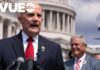

President Trump drew thousands to Port Huron and then flew to Mississippi, signaling a coast-to-coast Republican push days before the midterms.
Story Highlights
- Trump headlined a Port Huron, Michigan rally on October 25 at McMorran Place Arena.
- He urged turnout for Senate nominee Mike Rogers and gubernatorial candidate John James.
- Crowd estimates varied widely, from about 3,000 to roughly 20,000 people.
- Trump traveled to Mississippi the next day to back Senator Cindy Hyde-Smith.
Trump Targets Michigan With a Timed Rally Push
On October 25, President Trump led a midterm rally in Port Huron, Michigan, at McMorran Place Arena. The Republican National Committee listed the event and set his remarks for the afternoon, and local outlets reported his appearance as scheduled. The timing placed the rally eight days before Election Day. The setting put Trump in a blue-leaning state where Republicans aimed to boost turnout. The event served to center attention on statewide races and energize core supporters.
Trump used his speech to press Republicans to vote and framed the stakes as urgent. He told the crowd that they “have to win” and pushed people to “get out and vote,” according to local reporting. That language matched a base-first strategy used by sitting presidents who seek to raise energy, fill volunteer shifts, and lift down-ballot allies. The message was simple and repeated: show up, vote straight ticket, and treat the midterms like a referendum on his agenda.
Michigan Candidates at the Center of the Message
The rally spotlighted Republican Senate nominee Mike Rogers and gubernatorial hopeful John James. Reporters on site said Trump praised Rogers and voiced support for James, tying their races to national fights over energy prices, immigration, and schools. National outlets also noted that Trump’s schedule planned for him to appear with Rogers, confirming the campaign’s focus on the Senate contest. The stagecraft aimed to convert presidential attention into name recognition and enthusiasm for Michigan’s ticket.
The event also included sharp attacks on Democratic opponents. News accounts said Trump criticized Abdul El-Sayed and made claims about his background that were presented without evidence in those reports. The coverage captured the rhetoric but did not resolve the underlying assertions. That left the policy contrasts as the firmer campaign ground: Republicans argued for stricter border enforcement and lower energy costs, while casting Democrats as too liberal on policing and climate rules, according to rally summaries.
How Big Was the Port Huron Crowd?
Attendance estimates diverged. The Detroit News reported about 5,000 people inside the arena, while the Detroit Free Press reported about 3,000. The local Times Herald quoted Port Huron’s city manager claiming roughly 20,000, said to be the largest single event in city history. The reports did not explain methods or whether counts included people outside. Such gaps are common at rallies and can shape public views of momentum regardless of the true figure.
Researchers have found that crowd sizes are often hard to verify and easy to inflate. A Harvard-linked effort that tracks rallies uses conservative rules and has flagged wide swings in estimates across events. That pattern helps explain the spread between 3,000 and 20,000 in Port Huron and why campaigns highlight the largest claim to project strength. For voters, the more solid facts are the date, the venue, and the candidates who shared the stage.
Next Stop: Mississippi and the Map Republicans Want to Hold
The day after Port Huron, Trump traveled to Mississippi to back Senator Cindy Hyde-Smith, who faced Democrat Scott Colom. That trip underscored a push not only in battlegrounds but also in Republican states where the party wanted to lock down turnout. National reporting framed the visit as part of a wider sprint to defend seats and keep energy high across the map. The Mississippi stop fit the same playbook: spotlight the stakes, rally loyalists, and keep the news cycle focused on Republican themes.
Why These Stops Matter Beyond One News Cycle
Political scientists and past election studies suggest presidential rallies can lift enthusiasm and small-dollar giving for the president, with mixed results for other candidates. In a cycle defined by inflation, border concerns, and anger at elites from both left and right, these events work as signal flares. They try to convert frustration into votes. Whether that translates into wins depends on who shows up, not only for the rally, but at the polls eight days later.
Sources:
youtube.com, detroitnews.com, events.gop.com, freep.com, thetimesherald.com
© libertysociety.com 2026. All rights reserved.