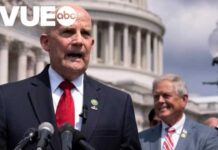
libertysociety.com — President Trump reversed a Pentagon troop cancellation within 48 hours and announced 5,000 U.S. soldiers heading to Poland — but NATO allies are left wondering whether Washington’s word still means anything.
Story Snapshot
- Trump announced 5,000 U.S. troops will deploy to Poland just days after the Pentagon canceled a planned 4,200-soldier brigade rotation.
- The rapid reversal left NATO allies publicly confused about whether the new troops are additional forces or simply replacements for the canceled deployment.
- Trump linked the decision partly to his personal endorsement of Poland’s newly elected president, raising questions about whether the move reflects strategy or political loyalty.
- NATO’s Secretary General and allied officials welcomed the announcement while simultaneously calling the administration’s messaging “confusing,” pressing Washington for clearer communication.
A Reversal That Raised More Questions Than It Answered
The Pentagon announced just last week that a 4,200-soldier Army brigade scheduled to rotate into Poland would not be deploying after all. Days later, President Trump posted on Truth Social that the United States would send an additional 5,000 troops to Poland, citing his relationship with newly elected Polish President Karol Nawrocki as part of his rationale. Defense Secretary Pete Hegseth followed up by telling the Polish prime minister that the U.S. “retains a strong military presence in Poland.” The whiplash between the two announcements caught allies off guard and set off a wave of questions across European capitals.
The core problem is that no one — including allied governments — could determine from public statements whether the 5,000 troops represent a genuine increase in American forces in Poland or simply a replacement for the canceled brigade. ABC News reported that it was not clear which troops Trump was referring to or when they would deploy. A Polish official confirmed the same uncertainty, saying it was unclear whether the delayed brigade would still ship out or whether the 5,000 would come from Germany or elsewhere in Europe. Without deployment orders, unit identifiers, or confirmed timelines made public, the announcement remained operationally ambiguous.
Allies Welcome the Move But Flag the Messaging Problem
NATO allies broadly welcomed the Poland troop announcement. Lithuanian Foreign Minister Kęstutis Budrys said, “We believe it’s in the U.S. interest to have deployments in Europe,” and NATO’s Secretary General affirmed that “the U.S. is still a strong ally.” But that welcome came wrapped in frustration. A European foreign minister described the administration’s messaging as “confusing indeed,” and multiple reports quoted allied officials as “scratching their heads” or “perplexed” by the sequence of events. NATO officials publicly called for better coordination and more predictable consultation from Washington going forward.
The administration’s own framing complicated matters further. Trump’s Truth Social post explicitly tied the troop decision to his endorsement of Poland’s president and their personal relationship. While Polish officials welcomed the announcement, that stated rationale made the move easier for critics to portray as a transactional political gesture rather than a durable strategic commitment. When security guarantees appear conditional on personal affinity rather than treaty obligations, allies reasonably ask what happens when the relationship cools.
The Bigger Picture: Force Redistribution or Strategic Drift?
The administration and Pentagon framed the troop movements as part of a broader review of U.S. force posture across Europe rather than a Poland-specific decision. General Alexus Grynkewich stated that the 5,000-troop reduction coming out of Europe reflects ongoing requirements to re-examine global force deployment. Separately, three U.S.-made F-35 fighter jets landed at Poland’s Łask Air Base as part of a $4.6 billion contract for 32 aircraft, a concrete sign of deepening U.S.-Poland defense ties that received far less attention than the troop confusion.
TRUMP DEPLOYS 5,000 ADDITIONAL TROOPS TO POLAND — ABRUPT REVERSAL OF PENTAGON CUT
Trump announced the deployment on Truth Social, linking it to his endorsement of Poland's President Nawrocki. Comes days after the Pentagon cancelled a planned 4,000-troop deployment as part of a…
— STOCK DUTY (@stock_duty) May 22, 2026
From a conservative standpoint, the underlying policy outcome — more American troops in Poland, advanced aircraft deliveries, and a Pentagon insisting on a strong presence — is defensible and arguably reflects exactly the kind of burden-sharing pressure Trump has long demanded from NATO allies. The problem is not the destination; it is the road taken to get there. Announcing a cancellation, then reversing it within 48 hours via social media, while tying the decision to a personal endorsement, hands critics a narrative of chaos that overshadows the substantive result. America’s allies need to trust not just the announcement but the process behind it. Right now, the process is doing real damage to that trust.
Sources:
[1] Web – In apparent reversal, Trump says he’s sending 5,000 troops to Poland
[2] Web – NATO allies perplexed as Trump restores US troop levels in Poland
[3] Web – NATO allies welcome Trump’s Poland troop announcement, but say …
[4] YouTube – NATO allies react to Trump’s sudden reversal on Poland …
[5] YouTube – Poland Welcomes Trump’s New Troop Promise After NATO Questions
[6] Web – NATO allies react to Trump’s sudden reversal on … – FOX 32 Chicago
[7] YouTube – Why Trump suddenly changed his mind on sending 5,000 US troops …
© libertysociety.com 2026. All rights reserved.