
President Trump ordered a substantial cut to upcoming U.S.–South Korea military drills just as North Korea steps up missile tests, reshaping a key front-line posture in days.
Story Snapshot
- Trump said he told the Pentagon to “substantially reduce” joint drills with South Korea.
- The order targets exercises he called costly and needlessly “hostile” in signaling to North Korea.
- The scheduled Ulchi Freedom Shield drills were set for Aug. 17–27 with detailed readiness scenarios.
- The scope and savings of the reduction were not specified in initial reports.
What The President Ordered And Why It Matters
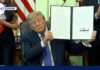
President Trump said he instructed Secretary of War Pete Hegseth to “substantially reduce” U.S.–South Korea joint military exercises. He tied the order to cost, saying the drills were expensive and sent the wrong signal to North Korea. He argued the events looked “hostile,” and said North Korean leader Kim Jong Un had been respectful during his time in office. The move touches a core alliance tool that blends training, deterrence, and diplomacy on the Korean Peninsula.
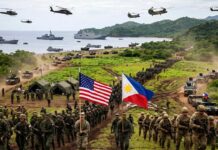
Reports identified the targeted period as the annual Ulchi Freedom Shield window, which was scheduled for August 17 to 27. Coverage described an 11-day exercise with South Korean forces and detailed training against modern threats. Planning called for counter-drone drills, responses to Global Positioning System disruptions, cyberattack scenarios, and other complex missions. Readiness tasks such as live-fire precision targeting and rapid logistics were also expected features.
What We Know And What Is Still Unclear
Trump’s statement set the policy direction, but the exact scope of “substantially reduce” was not defined in the first reporting cycle. Outlets did not list which events would be cut, whether live-fire parts would be canceled, or how much the scale would change. Coverage did not include a Pentagon execution order or a U.S. Forces Korea notice on final implementation that same day. Initial reports also did not show a cost breakdown to support the savings claim.
This uncertainty does not erase the significance of the order. Major drills shape how the alliance practices command and control, moves troops and gear, and works with new tech. Cutting scope can save money and lower tension in the short term. It can also reduce training time if not replaced with other events. Past cycles show both effects can be true at once, which is why changes often spark debate inside the defense and diplomatic communities.
How The Decision Fits A Long Pattern On The Peninsula
U.S.–South Korea exercises have long served two missions at once: build combat readiness and send signals. Larger drills can reassure allies and show strength. They can also raise tensions with North Korea, which often denounces them. Leaders sometimes scale back to open space for talks or to cool tempers. Research and past reporting say there is no single rule that always applies. Effects depend on timing, scope, and the wider crisis setting.
In recent planning, the allies updated drills to match new threats. Scenarios included drones, jamming of Global Positioning System signals, and cyberattacks. These reflect how modern fights can start fast and in the gray zone. Practice helps units coordinate under stress and keep supplies moving. Any reduction needs to preserve that edge through smaller drills, simulations, or targeted training so that core skills do not fade between major events.
Shared Concerns: Cost, Deterrence, And Transparency
Taxpayers want value for money, and service members want strong training. Trump highlighted cost and signaling. Alliance planners highlight readiness and deterrence. Both sets of concerns matter because the goal is peace through strength without needless risk. Clear guidance from the Pentagon on scope, timing, and alternatives would help the public judge trade-offs. It would also help allies align expectations as North Korea continues missile testing and hostile rhetoric.
US President Donald Trump announced the scaling back of annual military drills with South Korea, just a day before they were set to begin. Pyongyang has long condemned these exercises as invasion rehearsals, complicating the diplomatic landscape. #SouthKorea pic.twitter.com/apIQWRJqDK
— WW3 Watchtower (@WW3Watchtower) August 17, 2026
For citizens across the political spectrum, this is also a test of government discipline. People are tired of big promises and vague plans. They want straight facts on what will change, what will stay, and what the plan saves or costs. A prompt release of implementation details and any replacement training would show respect for the troops doing the work and for the taxpayers funding it. It would also steady the alliance message at a tense moment on the peninsula.
Sources:
townhall.com, ksat.com, internazionale.it, reuters.com, pbs.org, axios.com, abcnews.com, bloomberg.com
© libertysociety.com 2026. All rights reserved.