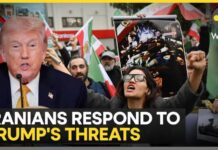

(LibertySociety.com) – President Trump declared “total regime change” in Iran following Operation Epic Fury, marking what may be the most dramatic shift in Middle East power dynamics in decades—or revealing the messy reality that even overwhelming military force can’t guarantee the outcomes Washington promises.
Story Snapshot
- Trump launched Operation Epic Fury on March 1, 2026, targeting Iran’s nuclear facilities, military infrastructure, and command structure after failed diplomacy
- Supreme Leader Ali Khamenei and senior officials killed in strikes; Trump claims “total regime change” achieved through decapitation of Iranian leadership
- U.S. now negotiating with “new, more reasonable regime” while threatening further escalation if Strait of Hormuz remains closed or talks fail
- Administration insists regime change was never the goal, yet welcomes Iranian-led transition as military objectives near completion
Operation Epic Fury Strikes Iranian Command
President Donald J. Trump authorized Operation Epic Fury on March 1, 2026, launching a comprehensive U.S.-Israeli military campaign against Iran’s nuclear program, ballistic missile arsenal, proxy networks, and naval forces. The operation followed June 2025’s Operation Midnight Hammer, which struck Iranian nuclear facilities after Tehran rejected diplomatic agreements and resumed enrichment activities. The administration characterized the strikes as necessary enforcement of red lines Trump established in summer 2025 against nuclear program restart, citing 47 years of Iranian aggression, terrorism sponsorship, and attacks killing hundreds of Americans.
Leadership Decapitation Reshapes Iranian Government
Precision strikes killed Supreme Leader Ali Khamenei and senior official Ali Larijani, fundamentally altering Iran’s power structure. Trump announced on March 29 that these assassinations constituted effective “regime change,” though administration officials simultaneously insisted toppling the government was never an operational objective. The White House framed the leadership deaths as incidental to military goals of degrading nuclear and conventional capabilities. By early April, U.S. officials confirmed engagement in “serious discussions” with what they described as Iran’s “new, more reasonable regime,” representing a less radical faction now controlling Tehran.
Military Objectives Achieved Without Ground Forces
White House Press Secretary Karoline Leavitt confirmed operational objectives progressing as planned, with Iran’s navy, air force, and ballistic missile systems largely destroyed. Defense Secretary Pete Hegseth reported successful degradation of infrastructure preventing Iranian power projection across the Middle East. The administration emphasized strategic lessons from Iraq, offering immunity to Iranian military personnel who stood down and explicitly avoiding deployment of substantial ground troops. This approach aimed to create conditions for Iranian-led political change rather than American occupation, addressing longstanding conservative concerns about nation-building quagmires that drain resources and American lives.
Trump Threatens Escalation Amid Negotiations
Despite claiming victory, Trump issued stark warnings via Truth Social threatening to obliterate Iran’s electric grid, oil wells, Kharg Island facilities, and desalination plants if negotiations fail or the Strait of Hormuz remains closed. The dual-track strategy of negotiating while maintaining escalation threats reflects the administration’s “peace through strength” doctrine. Analysts note this approach creates economic pressure potentially collapsing Iran’s infrastructure while offering diplomatic off-ramps. The Heritage Foundation praised the operation as avoiding Iraq’s failures, though critics from Responsible Statecraft argue regime change remains the administration’s biggest strategic miscalculation despite tactical military success.
Iranian People Face Uncertain Future
Pro-regime change demonstrations occurred in New York on March 15, with supporters arguing Iranian patriots now have their best opportunity for freedom in generations. Administration officials emphasize the U.S. welcomes Iranian-led political transformation without imposing American-style democracy through force. However, economic threats targeting electrical systems and water infrastructure raise questions about civilian impact. The situation presents a test case for whether decapitation strikes and military degradation can produce stable political transitions, or whether Washington has simply traded one set of problems for chaotic power vacuums that empower different extremist factions.
Congressional Republicans including Senator Tim Scott and Representatives Rick Crawford and Andrew Garbarino praised the operation as justified response to nuclear threats and terrorism. Defense experts like Seth Cropsey of the Yorktown Institute argue the campaign leaves Iran’s regime at its weakest point while solidifying American deterrence against rival powers. Yet fundamental contradictions persist between claiming regime change wasn’t the goal while celebrating its achievement, raising concerns among both conservatives tired of endless Middle East interventions and liberals worried about unilateral military action. The coming months will reveal whether Trump’s gamble produces the stable, less threatening Iran he promises, or another costly entanglement proving yet again that the government elite pursue their agendas regardless of lessons supposedly learned from decades of failed foreign policy.
Sources:
VOA Editorial on Iran Operation and Regime Change
Regime Change Iran Analysis – Responsible Statecraft
Operation Epic Fury: Peace Through Strength in Action – Heritage Foundation
Operation Epic Fury Explained: Riches and Domination Drive This War
Copyright 2026, LibertySociety.com