

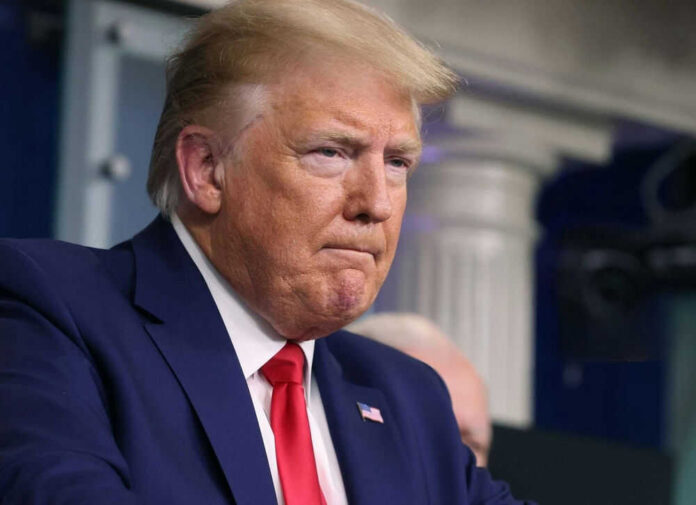
(LibertySociety.com) – President Trump’s warning that the U.S. will hit Iran “very hard” over the next week signals an escalation that could decide whether America stops a nuclear threat now—or gets dragged into a wider war later.
Quick Take
- Operation Epic Fury began February 28, 2026, with U.S. strikes coordinated with Israel and supported by regional partners.
- Trump says the next week will bring heavier strikes aimed at Iran’s nuclear program, missile forces, naval assets, and proxy networks.
- Iran has launched large missile and drone barrages since the opening strikes, increasing the risk to U.S. troops and allies.
- Domestic debate is intensifying, with civil-liberties groups challenging the operation’s legality while many Republican lawmakers back the mission.
Trump Signals a Harder Phase of Operation Epic Fury
President Donald Trump is publicly telegraphing a tougher week ahead in the U.S. campaign against Iran, tying the warning to Operation Epic Fury—an ongoing military effort the White House frames as “peace through strength.” The administration’s stated targets include nuclear facilities, ballistic missiles, naval forces, and proxy terror networks. Trump has also used regime-change language, a notable departure from narrower, one-off strikes seen in past U.S.-Iran flashpoints.
The timeline assembled across sources places the order for the operation on February 27, with the first wave of U.S. missiles and drones—alongside Israeli strikes—landing in Iran early February 28. Trump then released a video statement calling for regime change. The White House argues the action follows exhaustive diplomacy and decades of Iranian aggression, while acknowledging the operation could entail U.S. casualties and a prolonged timeline.
Why the White House Says the Strikes Are Necessary
The White House case rests on a familiar sequence: Iranian proxy violence, persistent missile development, and continued nuclear advancement despite sanctions and negotiations. Sources describe late-February nuclear talks collapsing after an Omani-mediated attempt to halt uranium enrichment failed, followed by strikes just days after diplomatic discussions were reportedly praised. In the administration’s telling, the central objective is preventing a “nuclear Iran,” with military force chosen after diplomacy did not achieve verifiable restraint.
Strategically, Operation Epic Fury is broader than a limited punitive raid. Reports describe a multi-week campaign designed to degrade Iran’s ability to threaten Israel, intimidate Gulf states, and endanger shipping. The U.S. posture has included major naval deployments, including carrier strike groups moving into the region earlier in 2026. That buildup matters because it signals preparation for sustained operations, not merely a short demonstration of force.
Iran’s Retaliation Raises the Stakes for U.S. Forces and Allies
Iran’s response, as summarized in the available research, includes heavy missile and drone launches after the strikes began, with figures reported in the hundreds of missiles and thousands of drones by early March. Those numbers are attributed to Iranian-state-aligned reporting and are not independently verified in the provided materials, but the trend line is clear: Tehran is attempting to impose costs through saturation attacks and through regional proxy networks.
That reality puts American service members and allied civilians at the center of the risk calculus. Sustained air and missile operations can suppress launchers and command nodes, but they rarely eliminate retaliation overnight—especially when a regime can disperse systems, operate through proxies, and exploit urban cover. The administration’s stated focus on missiles, the navy, and proxy infrastructure reflects that problem: stopping a nuclear program is one goal, but stopping day-to-day attacks is another.
Escalation Talk, “Unconditional Surrender,” and the Risk of Mission Creep
As of March 13, Trump has discussed escalation, including warnings of possible ground invasion and demands for unconditional surrender. That rhetoric is consistent with the operation’s stated aim of breaking Iran’s military capacity and forcing political change, but it also heightens uncertainty about end state. Expert analysis referenced in the research notes tensions between goals like toppling leadership versus accepting “new leadership,” and cautions that a weeks-long campaign could mean more deaths.
JUST IN – Trump says US will be hitting Iran hard over 'next week'https://t.co/inhno5GSH7
— Insider Paper (@TheInsiderPaper) March 13, 2026
At home, the split is sharpening along predictable lines: civil-liberties advocates argue the strikes lack congressional authorization, while many Republican lawmakers are publicly supportive and emphasize protecting troops and allies from terrorism and nuclear escalation. The constitutional question will not be resolved by slogans, but the practical reality is that sustained conflict abroad always pressures liberty at home through emergency powers, surveillance demands, and spending—issues conservatives will watch closely as operations expand.
Sources:
ACLU condemns President Trump’s unconstitutional military strikes on Iran
A Guide to Trump’s Second-Term Military Strikes and Actions
Copyright 2026, LibertySociety.com