(LibertySociety.com) – FBI Director Kash Patel has placed counterterrorism teams on high alert following a joint U.S.-Israel strike that killed Iran’s Supreme Leader, raising urgent concerns that Iran-backed sleeper cells embedded in America since the 1980s could activate for retaliatory attacks on U.S. soil.
Story Snapshot
- Operation Epic Fury killed Iran’s Ayatollah Khamenei and top IRGC commanders on February 28, 2026, prompting FBI high alert for potential sleeper cell activation
- FBI Director Kash Patel mobilized counterterrorism teams nationwide despite no specific credible threats identified, citing decades-old Hezbollah and Hamas networks in U.S. cities
- Texas Governor Greg Abbott deployed National Guard after Austin shooting linked to suspect with Iranian sympathies, while DHS issued no national terror alert despite escalating risks
- Former FBI officials warn Iran-backed operatives pose immediate danger as Tehran vows “crushing” retaliation for leadership decapitation strike
Joint Strike Decapitates Iranian Leadership
Israeli fighter jets launched missiles at a Tehran compound on February 28, 2026, at approximately 10 a.m. local time, killing Supreme Leader Ayatollah Ali Khamenei alongside IRGC Commander Mohammad Pakpour, Defense Minister Aziz Nasirzadeh, and three other senior officials. U.S. intelligence provided months of tracking data to enable the precision strike during a leadership gathering. President Trump characterized the operation as defensive “major combat operations” aimed at preventing Iranian nuclear advancement. Explosions were reported across seven Iranian cities including Tehran, Tabriz, and Qom, with Iran’s airspace shutting down for six hours and internet connectivity plummeting to 54 percent of normal levels.
Iran immediately launched retaliatory missiles toward Israel following the strike, while semi-official Iranian sources reported thousands of IRGC casualties across targeted military sites. The operation, dubbed Epic Fury, entered its second day on March 1 with continued strikes against Iranian infrastructure. Trump warned Iranian forces they faced “certain death” if they retaliated and urged the Iranian public to pursue freedom from the regime. The joint operation marked an unprecedented escalation, targeting Iran’s top leadership rather than proxy forces, fundamentally altering the security landscape for both the Middle East and American homeland defense.
FBI Activates Nationwide Surveillance Network
FBI Director Kash Patel issued a public alert via social media on February 28, announcing heightened surveillance of known Iran-backed networks across major U.S. cities. Counterterrorism teams mobilized to monitor Hezbollah and Hamas cells that former FBI Assistant Director Chris Swecker confirmed have operated in America since the 1980s. Retired FBI agent Jason Pack acknowledged the threat environment shifted dramatically post-strike, noting adversaries possess both intent and capability for attacks. Despite the elevated alert, no specific credible plots have been identified, leaving law enforcement to track known sympathizers and low-profile operatives who could be activated by Iranian handlers for retaliatory strikes.
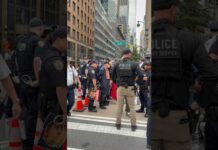
DHS Secretary Kristi Noem coordinated federal monitoring efforts but notably did not issue a National Terrorism Advisory System bulletin, despite precedents from prior Iran-related escalations. This silence drew criticism from homeland security analysts who argued the public deserves formal warnings about sleeper cell risks. The absence of an NTAS alert occurs amid a partial DHS shutdown that strains agency resources, complicating efforts to counter a dispersed threat. Surveillance has intensified around Jewish sites in New York City ahead of Purim, with NYPD deploying additional patrols as a precautionary measure against potential Iran-directed violence targeting vulnerable communities.
Texas Deploys National Guard After Suspicious Shooting
Texas Governor Greg Abbott activated National Guard units on March 2 following an Austin bar shooting where the suspect reportedly responded to an Iranian Foreign Minister’s social media post endorsing the “Islamic Revolution.” Abbott declared that sleeper cells “must be taken seriously,” emphasizing state-level security measures cannot wait for federal coordination. Texas Attorney General Ken Paxton highlighted the FBI’s ongoing Joint Terrorism Task Force investigation into potential terrorism links, though no formal charges have been filed. The incident mirrors concerns raised after a Canada gym attack also prompted scrutiny of Iran-connected individuals, amplifying fears that lone wolves inspired by Tehran’s rhetoric could strike without direct operational orders from IRGC handlers.
Security experts emphasize the danger posed by decentralized networks that require minimal coordination to execute attacks. Hezbollah and Hamas sympathizers identified at protests in cities like New York on February 28 demonstrate the visible presence of individuals potentially receptive to Iranian calls for retaliation. Former FBI officials argue the current environment presents a higher activation risk than routine monitoring periods, as Iran’s vow of a “crushing” response provides ideological justification for operatives awaiting orders. The convergence of overseas military success and domestic vulnerability underscores a critical challenge: dismantling Iran’s leadership abroad may provoke asymmetric retaliation at home, exploiting open-border policies and resource limitations that hamper comprehensive surveillance of every suspected cell member across the nation.
Sources:
After U.S.-Israel Strike Kills Iranian Leaders, FBI Shifts to High Alert at Home – Fox News
US and Israel Launch Major Strike on Iran, Killing Khamenei – Iran International
NYPD Enhances Patrols Due to Jewish Holiday Security Concerns, Iran Attack – ABC7 New York
Copyright 2026, LibertySociety.com