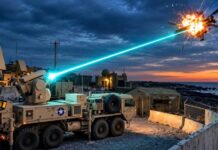

The United States and Japan just ran a massive military exercise within 110 kilometers of Taiwan, deploying missile systems built to sink ships and reach mainland China.
Story Snapshot
- Keen Sword 27 drew roughly 45,000 Japanese troops and 12,000 American troops, with drills staged near Yonaguni island, just 110 kilometers from Taiwan.
- Japan and the U.S. deployed long-range missile systems, including one Japanese weapon capable of hitting mainland China.
- Separate analysis tracked 13 maritime incidents in one week and a major shipping line pausing some bookings, showing how military tension can choke commerce without a single shot fired.
- Experts warn that a crisis in one ocean, like the Middle East, can drain the weapons and ships needed to deter trouble in the Pacific.
- Past Taiwan Strait standoffs show pressure can build for years without turning into full war, but the risk of a costly mistake never fully goes away.
A Big Show of Force Near Taiwan
Keen Sword 27 brought together about 45,000 Japanese service members and 12,000 American troops in one of the largest joint drills in the region. The exercise placed forces near Yonaguni, a small Japanese island only 110 kilometers from Taiwan’s coast. Troops practiced with systems built for modern naval combat, including NMESIS and MADIS anti-ship missile platforms and HIMARS rocket launchers.
Japan also showed off a missile with a range of about 1,000 kilometers, long enough to strike mainland China. Pairing that weapon with America’s NMESIS anti-ship system sends a clear signal to Beijing. The message: both allies can hit targets far beyond their own shores if a fight over Taiwan ever breaks out. That capability upgrade marks a real shift from past, smaller drills in the region.
Why Shipping Lanes Matter as Much as Warships
Winning a military standoff does not guarantee safe shipping. A recent analysis found that military control and commercial access are two separate problems entirely. Between October 5 and October 11, the International Maritime Organization logged 13 separate maritime incidents. Shortly after, the shipping giant Maersk announced temporary booking restrictions on October 30, a sign that unease was already spreading through the supply chain.
That pattern has shown up before in other waterways. Near the Persian Gulf, tanker traffic dropped sharply once insurers pulled back war-risk coverage, even though no ships were actually seized and no missiles were fired. The market closed the route before any navy had to. A similar dynamic near Taiwan could choke trade long before any battle starts, hitting global supply chains that depend on Pacific shipping lanes.
One Crisis Can Drain Resources From Another
Separate conflicts do not stay separate when it comes to military supplies. Analysts note that fighting in the Middle East eats into American weapons stockpiles that might otherwise support Pacific defense. Ammunition production tied to the war in Ukraine also shapes how much firepower allies can spare for Asia. Disruption near the Red Sea ripples outward, hitting economies thousands of miles away.
That overlap matters because it means a crisis does not need to start in the Pacific to weaken America’s position there. Weapons sent to one theater cannot also sit ready in another. Coordinating strategy across the Strait of Hormuz, the Arabian Sea, the Bay of Bengal, and the Western Pacific is no longer optional for planners trying to keep any one region stable.
History Offers a Warning, Not a Script
Taiwan Strait tensions are not new. Crises in 1954-55 and again in 1958 saw real armed clashes over offshore islands without tipping into a wider war. Those standoffs dragged on for years, driven by calculations about alliance commitments and how far the United States would actually intervene. The pattern suggests pressure can simmer for a long time before anything boils over.
[ MARITIME SECURITY & GRAY ZONE ECONOMIC WARFARE ]
• INCIDENT VECTOR: A strategic analysis published in the *Small Wars Journal* by Sandra Roshonda Thomas on November 13, 2026, recontextualizes the ongoing maritime blockades in the Strait of Hormuz not merely as a regional…
— ⬛twentythirty⚫ (@biente30) November 13, 2026
Research on joint military exercises backs this up. Studies show drills run within formal alliances tend to lower, not raise, the odds of conflict escalating, since allies place institutional limits on how far partners can push. Still, that same research admits exercises can backfire, raising anxiety and creating chances for an accidental clash. Not every government in the region reads these drills the same way, since each country weighs its own interests separately.
What Comes Next
None of this guarantees a wider Pacific crisis is coming. It does show that military signaling, shipping disruption, and resource strain across different oceans are now tightly linked. Watching troop movements near Taiwan without tracking insurance rates, shipping bookings, and weapons stockpiles elsewhere would miss half the picture. For now, the exercises have ended without incident, but the underlying pressures they expose have not gone away.
Sources:
© libertysociety.com 2026. All rights reserved.