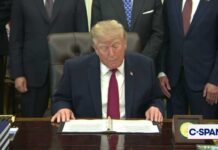

President Trump will spend 32 straight days on the road to defend the Republican majority in Congress ahead of November’s midterms.
Story Snapshot
- Trump announced a “32-day tour” to boost Republican candidates before the midterms.
- The White House framed the push as central to holding Congress amid tough polls.
- The first stops include Texas and Ohio, with more states to follow.
- Presidents often campaign in midterms, but their parties usually lose House seats.
Trump Puts Himself At The Center Of The Midterm Fight
President Trump told reporters he will launch “literally a 32-day tour” leading into Election Day. He said the blitz is designed to help Republicans hold the House and Senate. Reuters reported the White House sees his record as a key part of the party’s case to voters. This move places the president on stage every day as early voting ramps up. It also signals that national issues and his brand will define the final stretch.
Associated Press coverage said the swing begins Thursday in Texas, with Ohio also on the early list. That track mixes safe Republican ground with states that have competitive districts. Campaigns often pair a rally with local media to drive turnout. The schedule also acts as a fundraising tool. Candidates tend to plan joint events and donor meetings around presidential stops. The tour aims to project momentum while keeping supporters engaged through Election Day.
Why A 32-Day Blitz Matters — And Its Limits
Midterm elections often punish the party in the White House. Since World War II, the president’s party has lost House seats in most midterms, which shapes strategy and expectations. That history is why presidential travel tends to focus on energizing the base and narrowing losses, not sweeping gains. Research on presidential visits shows leaders target close races and places where turnout can swing a contest. The logic is simple: go where a small push can matter.
Scholars who study presidential travel note that second-year terms see heavy political trips, as presidents campaign and raise money for allies. That pattern matches the current plan. The White House can marshal press, surrogates, and policy announcements to frame a visit. But the effect size is usually modest and short-lived. That is why campaigns cluster stops in the final month. They want any bounce to last into early voting and through Election Day.
Early Stops Signal Strategy Focused On Turnout
Initial reporting lists Texas as the opener, followed by Ohio, with more states to come. Those choices reflect two goals. First, secure safe Republican areas to protect incumbents and lift statewide turnout. Second, hit battleground districts where a few thousand votes could decide control. Al Jazeera likewise reported the tour will span multiple states, underscoring a national push to keep Congress. The map blends defense and selective offense.
NOW OR NEVER | President Trump is launching a 32-day, 30-stop nationwide campaign.
President Donald Trump is kicking off a massive 32-day campaign blitz in Texas and Oklahoma to rally voters and help Republicans protect their slim congressional majorities.
Here is the breakdown… pic.twitter.com/oQMnZsTzAa— Illinois247 (@illinois247news) October 1, 2026
Politically, both left and right agree on one point: Washington feels distant from daily struggles. Voters worry about high prices, energy bills, immigration chaos, and the widening wealth gap. Others see threats to civil rights and less help for families. A monthlong barnstorm shows that national leaders know the stakes. But rallies alone will not fix those pressures. Voters will judge whether speeches match plans to lower costs, secure the border, and raise incomes.
What To Watch As The Tour Unfolds
Watch where the president goes in week two and week three. Those choices will reveal which races the party thinks are tight. Track whether events shift small-dollar donations or spark local volunteer sign-ups. Look for policy tie-ins timed to stops, like energy or border actions, to reach key voters. Finally, compare the schedule against past midterms, where presidents helped on the margins but could not change the overall tide. That is the test for this 32-day sprint.
Sources:
facebook.com, reuters.com, aljazeera.com, apnews.com, theepochtimes.com
© libertysociety.com 2026. All rights reserved.