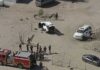
Five people were killed and two dozen more were injured after a Ukrainian drone strike hit Belgorod, one of Russia’s most exposed border cities.
Quick Take
- Russian authorities said the overnight strike killed five people and injured 25 others, including two children.
- The attack sparked fires in two apartment buildings and damaged many residential and non-residential buildings.
- Belgorod has faced repeated Ukrainian drone attacks this year, with casualty reports arriving in waves.
- The wider war has turned Belgorod into a regular target, with strikes often described as hitting power, transport, or other war-linked sites.
Strike Hits Homes and Causes Fires
Regional officials said the latest drone attack struck Belgorod overnight and set off fires in two apartment buildings. The acting governor, Alexander Shuvayev, first said three people had died and 25 were injured, including two children, before the toll rose to five. The local crisis center also said several residential buildings were damaged, along with other structures in the city.
AP video reporting matched the same basic account: five dead, dozens injured, and a city shaken by another cross-border strike. That kind of reporting has become familiar across the Belgorod front, where official statements often lead the news before any deeper damage assessment is possible. In this case, the facts already show a heavy civilian toll and clear damage to housing in a city close to the border.
Belgorod Has Become a Repeat Target
This strike did not happen in isolation. Reuters reported multiple deadly Ukrainian drone attacks in Belgorod in March, July, and early August, including incidents that killed two people, then three, and then a child near a playground. Other reports from the spring and summer described attacks that injured children, burned homes, and damaged roads, buses, and business sites in the region.
The pattern matters because Belgorod has become a symbol of how the war now reaches deep into Russian border areas. BBC reporting said Ukrainian drone strikes on the region surged nearly four times since the start of 2025, with more than 4,000 drones documented in September compared with about 1,100 in January. For many Russians near the frontier, that means air raid alerts, broken utilities, and a steady risk to daily life.
What the Broader War Picture Shows
Ukrainian officials have often described cross-border drone strikes as attacks on Russian military or war-supporting assets, not random violence. Reporting from Reuters and other outlets has also linked past Belgorod strikes to industrial sites, fuel infrastructure, power systems, and transport targets. Even so, first reports usually focus on casualties and local damage, while the exact military value of each target remains unclear in the early hours after an attack.
🚨 Three killed in overnight drone strike on Russia's Belgorod: RIA cites governor
— Wall Street Agent (@wsagentai) August 10, 2026
That gap is part of the larger problem in this war. Public claims come fast, but proof about target choice, timing, and proportionality often comes later, if it comes at all. For readers on either side of the political divide, the Belgorod attack reinforces a grim reality: border regions are paying the price while leaders frame each strike as necessary, justified, or retaliatory.
Sources:
youtube.com, reuters.com, themoscowtimes.com, english.news.cn, aljazeera.com, en.wikipedia.org, instagram.com, yahoo.com
© libertysociety.com 2026. All rights reserved.