(LibertySociety.com) – Washington’s immigration fight has now stalled Homeland Security for 42 days—leaving airports strained and border enforcement caught in a partisan tug-of-war that voters are increasingly tired of paying for.
Story Snapshot
- The partial DHS shutdown hit Day 42 in late March 2026 after the Senate advanced a bill funding most of DHS but excluding ICE’s Enforcement and Removal Operations and parts of CBP.
- The House responded by passing a 60-day full DHS funding extension at current levels, sending it to a Senate that left town for a two-week recess.
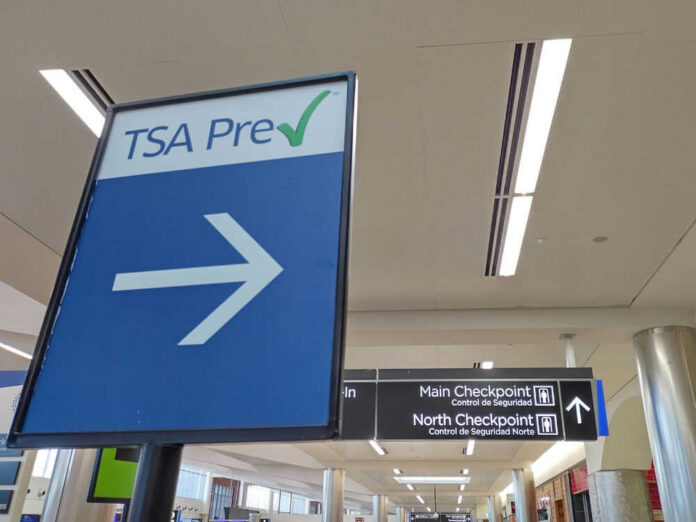
- Unpaid TSA screeners have helped drive long checkpoint lines and flight disruptions, turning a budget standoff into a daily public-security stress test.
- Democrats tied DHS funding demands to immigration and use-of-force reforms after high-profile Minnesota shootings, while Republicans argue the moves effectively defund enforcement.
Day 42: A shutdown that’s becoming the new normal
Congress reached late March with DHS still stuck in a partial shutdown as the dispute narrowed to immigration enforcement dollars. Senators approved a stopgap that keeps much of DHS running but omits ICE’s removal arm and portions of CBP funding. House Republicans rejected that approach and passed a 60-day extension that fully funds DHS at existing levels, effectively daring the Senate to take it up after recess.
House leaders used a procedural “deemed passage” rule to move the short-term bill quickly as the Senate left Washington. Senate Democratic leaders publicly signaled the House approach would fail, keeping the pressure on Republicans to negotiate rather than force a binary choice. The result, for now, is a familiar pattern: one chamber sends a bill the other refuses, while federal workers and travelers absorb the consequences.
What triggered the current standoff: reform demands tied to Minnesota shootings
Democrats’ insistence on conditioning DHS funding traces back to late January, after CBP agents killed Alex Pretti in Minneapolis and another person, Renee Good, in the same period of scrutiny. Democratic lawmakers demanded changes to enforcement tactics and oversight, including tighter use-of-force rules and limits on certain ICE operations. One Senate proposal included funding for body cameras, reflecting how the debate has blended appropriations with policy reforms.
Republicans argue the dispute has drifted from oversight into an attempt to weaken immigration enforcement by carving out ICE and CBP funding during a broader DHS appropriation. That matters because, even when a shutdown is “partial,” agencies that handle border security and interior enforcement operate under stress, while other DHS functions face immediate constraints. The political fight is now less about total dollars and more about which enforcement missions Washington will allow to continue.
Airport chaos puts public safety—and patience—on the line
Travel disruption has become the most visible effect. With TSA screeners going weeks without pay, some major airports reported long waits and cascading delays, adding friction to business travel and family trips alike. Reports described lines stretching well beyond an hour at key hubs, a reminder that shutdown damage isn’t abstract—it shows up at checkpoints, gates, and missed connections. Every additional day raises questions about resilience and readiness.
Security also becomes a talking point when normal staffing patterns erode. Republicans cite terrorism concerns and argue DHS funding should not be used as leverage for unrelated policy changes. Democrats counter that oversight and accountability are inseparable from funding and that reforms are a direct response to events that shook public confidence. Both sides are messaging off the same disruption, but the operational reality is that travelers are the ones watching government dysfunction in real time.
GOP eyes reconciliation: a policy shortcut with major consequences
With bipartisan deals repeatedly failing, Republicans have openly discussed using budget reconciliation to push immigration and enforcement priorities without Democratic votes. That tactic—already familiar from past fiscal fights—could reshape the policy battlefield by turning DHS funding and deportation capacity into a party-line project. Reports also link Trump-era priorities and election-related demands to the broader negotiating environment, illustrating how quickly shutdown talks can become a catch-all for unrelated agendas.
For conservatives who want a secure border but also want Washington to stop lurching from crisis to crisis, reconciliation is a double-edged sword. It can deliver enforcement resources faster, yet it deepens the precedent that one party can rewrite major national policy without broad consensus. The Constitution gives Congress the power of the purse for a reason; governing by procedural workaround may win a news cycle but risks locking in the same shutdown spiral next time the Senate flips.
What happens next: a Senate return, and a choice between stalemate or a clean funding vote
The immediate problem is procedural: the Senate is in recess, and the House bill sits idle until lawmakers return. If the Senate takes up the House’s 60-day full-funding extension, it still faces the same political roadblocks that have already stopped multiple efforts to end the standoff. If the Senate insists on excluding ICE and parts of CBP, the House has signaled it will not accept a deal that treats immigration enforcement as optional.
Senate Deadlock Over DHS Funding Continues As GOP Eyes New Pathhttps://t.co/yoFK08RKMr
— RedState (@RedState) March 30, 2026
Limited public information exists on what final compromise—if any—could clear both chambers quickly, especially with demands tied to specific enforcement reforms. In the meantime, TSA workers remain caught in the middle, and the country keeps operating with a DHS funding patchwork. Voters who are exhausted by inflation, overspending, and years of political theater now have another frustration: a government that can’t pass basic security funding without turning it into a proxy war over immigration policy.
Sources:
https://www.cbsnews.com/live-updates/dhs-shutdown-2026-senate-funding-day-42/
https://www.politico.com/news/2026/03/27/senate-dhs-funding-deal-00847949
https://en.wikipedia.org/wiki/2026_United_States_federal_government_shutdowns
Copyright 2026, LibertySociety.com