
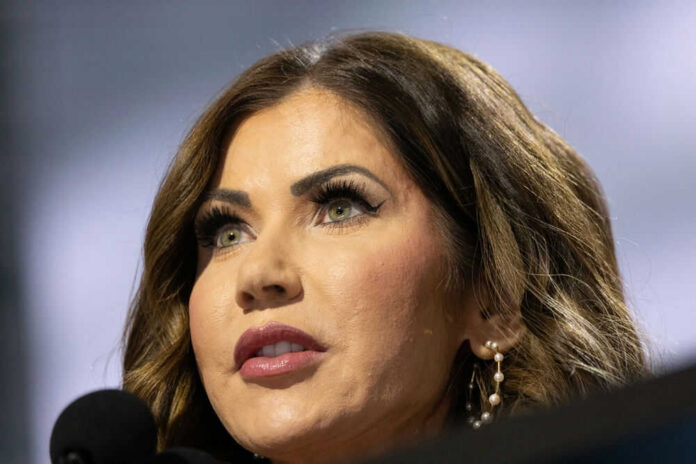
(LibertySociety.com) – Trump’s decision to remove Homeland Security Secretary Kristi Noem shows the White House is willing to police its own—especially when taxpayer dollars and sworn testimony collide.
Quick Take
- President Trump announced Kristi Noem’s exit from DHS on March 5, 2026, making her the first cabinet-level firing of his second term.
- Sen. John Kennedy’s pointed questioning over a $220 million DHS ad campaign intensified scrutiny about whether the spending was justified and who approved it.
- Sen. Markwayne Mullin will take over as DHS Secretary on March 31, with Deputy Secretary Troy Edgar serving as acting secretary during the transition.
- Operational controversy—including a Minnesota immigration operation linked to the deaths of two Americans—added pressure during an already tense period for DHS.
- DHS remains partially unfunded amid a standoff as Democrats tie funding to major enforcement and operational changes.
Trump Moves to Reset DHS Leadership After Weeks of Turmoil
President Donald Trump fired Homeland Security Secretary Kristi Noem on Thursday, March 5, 2026, and announced Sen. Markwayne Mullin of Oklahoma as her replacement, effective March 31. Deputy Secretary Troy Edgar is expected to run the department in an acting role until the handoff. Trump framed Noem’s move as a transition into a newly created position—Special Envoy for “The Shield of the Americas”—with more details promised at an event in Doral, Florida.
Noem’s removal landed after a rapid sequence of congressional appearances that kept DHS controversies in the spotlight. On March 3, Noem faced tough questioning in the Senate, including sustained focus on a $220 million DHS advertising campaign that prominently featured her. On March 4, she appeared at a House hearing where lawmakers raised personal-conduct rumors involving DHS adviser Corey Lewandowski, allegations that remain unproven and were reported as denied by Noem.
Kennedy’s Ad-Campaign Questions Put Spending and Accountability Front and Center
Sen. John Kennedy’s line of questioning zeroed in on a basic expectation of conservative governance: justify big spending or expect consequences. The controversy centers on whether the DHS ad buy was designed for a clear policy purpose or whether it looked self-promotional, given Noem’s prominence in the ads. Reporting also described Trump as angry about conflicting accounts of whether he approved the campaign, turning a spending dispute into a trust-and-discipline problem.
That accountability angle matters to voters who watched Washington normalize giant price tags under prior leadership and then lecture families about tightening their belts. The available reporting indicates Kennedy’s questioning helped expose a gap between what was said publicly under oath and what the president later asserted about his awareness. While Democrats criticized the ad buy as waste, the core conservative concern is simpler: taxpayers fund operations, not political branding—no matter who benefits.
Minnesota Enforcement Operation Fallout Added Pressure on DHS
Noem’s problems were not limited to messaging and money. A February 2026 federal immigration enforcement operation in Minnesota became a flashpoint after two American citizens died during protests linked to the crackdown. That incident drew bipartisan criticism and intensified calls for changes in ICE tactics. Reporting also tied the operation’s planning to a DHS official, Gregory Bovino, who came under investigation for antisemitism, further clouding the department’s leadership picture.
The research does not provide a full operational after-action account, so the precise chain of decisions behind the Minnesota incident remains incomplete in public reporting. Still, the political impact is clear: when Americans die amid domestic enforcement turmoil, Congress demands answers, and the public expects a department built for security to function with competence and restraint. Trump’s leadership change allows DHS to recalibrate while the broader immigration enforcement agenda continues.
Partial Funding Standoff Raises Stakes During the Transition
DHS enters the transition period while partially unfunded, as Democrats have withheld new funding pending operational changes. The reported demands include curtailing ICE patrols, restricting agents from wearing face masks, and requiring judicial warrants before entering private property. Those proposals collide with a law-and-order approach that prioritizes effective enforcement and officer safety. The standoff also means Edgar and the incoming leadership must manage daily security missions under budget uncertainty.
GOP Holds Its Own Accountable: Kennedy's Grill Session and Trump's Anger Lead to Noem's DHS Exit https://t.co/zjuhNF4KPh
— Twitchy Updates (@Twitchy_Updates) March 5, 2026
Mullin’s appointment signals a shift toward a DHS chief with strong congressional instincts at a moment when oversight and appropriations fights are shaping policy outcomes. Noem, meanwhile, is slated to take on “The Shield of the Americas,” described as a Western Hemisphere security initiative. Key details—scope, authorities, cost, and coordination with Congress—were not fully laid out in the research, making it an initiative conservatives will likely watch closely for measurable results and limited bureaucracy.
Sources:
Kristi Noem ousted from Homeland Security post amid recent turmoil
Trump fires Homeland Security chief Kristi Noem
Noem risks going from shutdown to shut out
Donald Trump fires Homeland Security chief Kristi Noem
Copyright 2026, LibertySociety.com