
(LibertySociety.com) – When President Trump signed away the Department of Education’s future, he didn’t just make history, he triggered the greatest reshuffling of American educational power in decades, with every parent, teacher, and student now bracing for a tectonic shift whose ripples are only just beginning.
Quick Take
- Trump’s 2025 executive order set in motion the dismantlement of the Department of Education, transferring power to the states.
- Secretary Linda McMahon insists the move is bipartisan and nonpartisan, but critics warn of harm to vulnerable students.
- $6.8 billion in federal education funds have been released to states, but civil rights enforcement and oversight are in jeopardy.
- Debates over equity, local control, and the future of public education intensify as the transition unfolds.
The Day the Department Began to Disappear
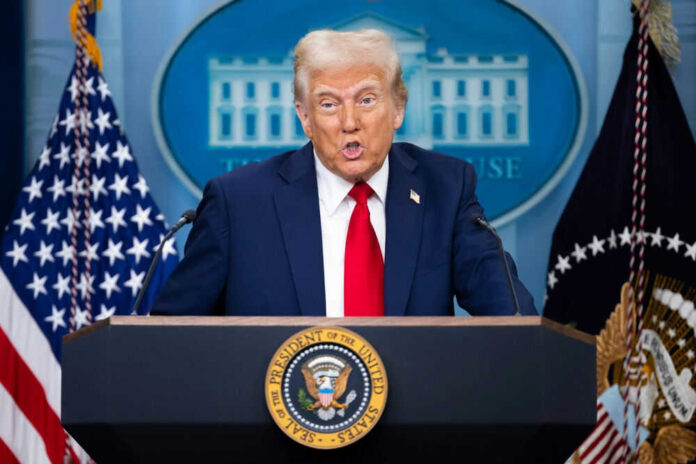
On a brisk March morning in 2025, President Donald Trump’s signature on an executive order did what generations of conservative politicians only talked about: it put the U.S. Department of Education on the path to extinction. Secretary Linda McMahon, cast as the architect of this seismic transition, addressed a tense gathering of state leaders at the National Governors Association. She framed the move not as a partisan sledgehammer, but as a long-overdue pivot, one that would place power back in the hands of states and communities, away from what she called “the fog of federal micromanagement.” But as cameras flashed and headlines screamed, the real questions began: could local control truly replace decades of federal oversight and would the children most at risk be left to weather the fallout alone?
The Department’s immediate response was swift and mercilessly efficient. Staff reduction plans unspooled, offices began shuttering, and $6.8 billion in previously frozen education funds were handed to governors, block grants with far fewer strings attached than ever before. For some, these were long-awaited reforms. For others, they were a recipe for chaos, especially as news broke that the Department’s civil rights office was being downsized, raising alarms from coast to coast about the fate of anti-discrimination enforcement and special education protections.
State Power, Local Fears, and National Uncertainty
Governors, already juggling a post-pandemic crisis in student achievement, found themselves suddenly flush with federal cash but saddled with a mountain of new responsibilities. As Linda McMahon reassured state leaders that “help is on the way,” many wondered if that help would be enough, or even arrive at all. Republican governors cheered the new autonomy, while Democrats voiced concern that the breakneck pace of change threatened to leave behind students in districts with fewer resources.
On the ground, the stakes were painfully clear. Teachers’ unions braced for possible layoffs as federally funded programs faced the axe. Local school boards, used to federal guardrails on everything from special education to civil rights, scrambled to understand their new obligations. For families in low-income and rural communities, the worry was palpable: would state leaders fill the gap, or would the patchwork of American education become even more uneven, with opportunity depending on your ZIP code?
The Battle Over Equity and Control
While McMahon and Trump allies portrayed the dismantling as a bipartisan return to American roots, civil rights advocates and education experts sounded the alarm. The National Education Association called the plan devastating for vulnerable students. The Center for American Progress warned of teacher layoffs and declining quality in the nation’s poorest schools. The ACLU accused the administration of gutting decades of progress on educational equity. Each group cited the Department’s historic role in enforcing Title I funding, civil rights, and disability protections, functions that, for now, face an uncertain future as the federal government steps back.
For policy scholars, the moment is both a culmination and a gamble. While states have long controlled curriculum, the federal government’s oversight has been the last line of defense for minimum standards and equity. With that safety net fraying, the risk is clear: a race to the bottom, where states outcompete each other to cut costs or lower standards. Yet, supporters argue that local innovation could flourish, with communities tailoring solutions to their unique needs. The open question, one that no executive order can answer, is whether that innovation will lift all boats or leave the most vulnerable stranded.
What Happens Next? Uncharted Waters Ahead
As the Department of Education winds down, the transition is anything but settled. Congress must still act to legally shutter the agency and reallocate its statutory responsibilities. Meanwhile, advocacy groups are preparing legal challenges, and governors are racing to build up their own education infrastructures. The only certainty is that the nation’s approach to public education will never be the same. For many families, the open loop is excruciating: will their children’s schools emerge stronger, or will the loss of federal oversight expose deep and widening divides?
The next chapter will be written not just in congressional hearings or courtrooms, but in classrooms from Maine to California. Everyone with a stake in American education is waiting for answers, knowing that, for better or worse, the story has only just begun.
Copyright 2025, LibertySociety.com .