
(LibertySociety.com) – When the CIA director and the Senate intelligence chairman publicly agreed with President Trump’s explosive accusation that Russia and China are secretly breaking the global nuclear test ban, Washington’s quiet corridors of power erupted in a rare chorus, and the echo is still reverberating.
Story Snapshot
- President Trump’s claim of secret Russian and Chinese nuclear tests receives direct backing from top U.S. intelligence and legislative officials.
- China categorically denies the allegations, calling them unfounded and reaffirming commitment to international test ban treaties.
- The episode signals a potential shift in U.S. nuclear policy amid rising strategic competition and arms control uncertainty.
- Absence of public evidence leaves the global arms control community in suspense, while policymakers debate possible American nuclear test resumption.
Trump’s Public Accusation Shakes Global Nuclear Consensus
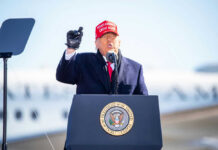
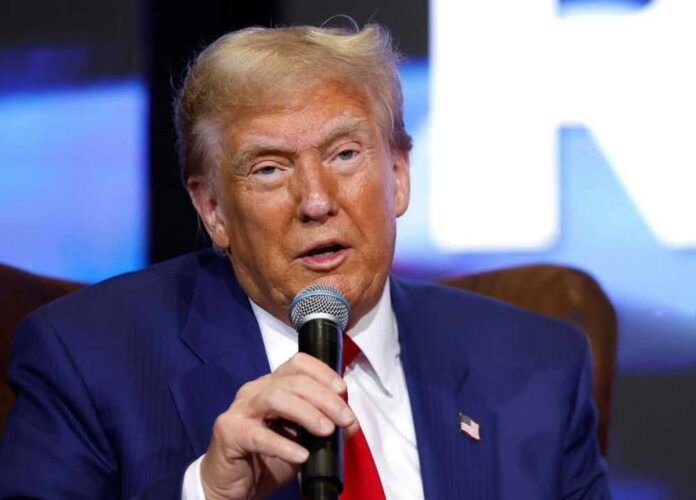
President Trump sent shockwaves through diplomatic circles when he claimed, just hours before a major summit with China’s president, that both Russia and China have been conducting clandestine nuclear tests in violation of long-standing international norms. This claim was not merely a presidential tweet lost in the ether, it was immediately and unusually echoed by CIA Director John Ratcliffe and Senate Intelligence Committee Chairman Tom Cotton, who declared that U.S. intelligence supports Trump’s concerns. The alignment between the White House, intelligence, and Congress on such a sensitive issue is virtually unprecedented. The timing, on the eve of high-stakes talks, raised the stakes even further.
The shock of these allegations lies not just in their substance, but in the context. For three decades, the world’s nuclear powers have observed a de facto moratorium on nuclear testing, following the signing of the Comprehensive Nuclear-Test-Ban Treaty (CTBT), even though the treaty remains unratified by the U.S., Russia, and China. The last confirmed nuclear tests by these powers were in the 1990s. The claim that Russia and China have upended this fragile equilibrium, if true, would mark a seismic shift in the global nuclear order.
China’s Swift Denial and the Diplomatic Standoff
China responded with speed and certainty, issuing a formal denial through its foreign ministry: “China has always strictly fulfilled its international obligations and commitments.” The Chinese government dismissed Trump’s accusation as baseless and reaffirmed its adherence to the test ban regime. Russia, for its part, did not issue a direct public response, but both countries have consistently rejected previous U.S. suspicions about low-yield or subcritical nuclear activities. The diplomatic temperature rose sharply, with American, Chinese, and Russian officials maneuvering to shape global perceptions.
Despite the public alignment of top U.S. officials, no direct evidence has been released to support claims of secret nuclear tests. Intelligence assessments remain classified, leaving the international community to weigh assertions against denials. Arms control experts warn that, absent verifiable proof, the risk of escalation and reciprocal testing may be higher than ever.
Implications for U.S. Nuclear Policy and Global Stability
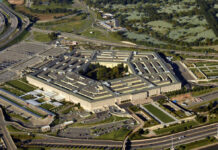
Trump’s announcement did not stop at public accusation. He ordered the Pentagon to prepare for renewed American nuclear testing “on an equal basis” with Russia and China. This policy directive signals a possible end to decades of restraint and opens the door to a new phase of strategic competition. The U.S. military and scientific communities now face the prospect of resuming nuclear testing, a move with far-reaching consequences for environmental safety, public health, and global security.
The ripple effects extend to international arms control. The credibility of the CTBT and related treaties is at stake, as is the future of nonproliferation efforts worldwide. Nuclear weapons industries may see revived activity, while verification and monitoring organizations confront new challenges. Short-term, the episode has heightened tensions and uncertainty; long-term, it may erode the hard-won norms that have kept nuclear tests largely in check for a generation. As experts caution, once one domino falls, others may quickly follow, fueling an arms race with unpredictable results.
Expert Perspectives and Unanswered Questions
Arms control scholars and intelligence professionals urge caution. The detection of low-yield or subcritical nuclear tests is notoriously difficult, especially in closed societies like Russia and China. While the CIA director and Senate intelligence chairman’s statements carry significant authority, the absence of public evidence leaves their assertions open to scrutiny. Nonproliferation authorities emphasize that North Korea remains the only nation with confirmed nuclear tests in the 21st century, and that destabilizing the test ban regime could have grave consequences.
Independent analysts call for greater transparency and multilateral verification. They argue that the current diplomatic standoff risks undermining trust and fueling a dangerous cycle of accusation and escalation. As the world waits for proof, or for cooler heads to prevail, the open question remains: Are we witnessing the beginning of a new nuclear age, or a political gambit with global stakes?
Copyright 2025, LibertySociety.com .