
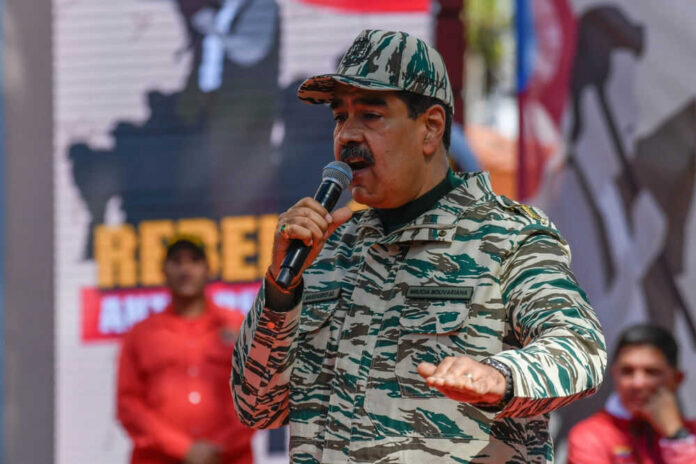
(LibertySociety.com) – A sudden shift in U.S. policy towards Venezuela has sparked widespread debate among conservatives.
Story Overview
- President Trump signals possible talks with Venezuelan President Maduro.
- U.S. military presence in the Caribbean intensifies.
- The shift contrasts years of U.S. policy to isolate Maduro.
- Concerns arise over potential impacts on U.S. credibility and regional stability.
Trump’s Unexpected Shift in Policy
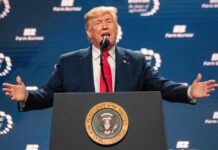
President Donald Trump has expressed a willingness to engage in diplomatic discussions with Venezuelan President Nicolás Maduro. This comes after years of U.S. efforts to isolate Maduro’s regime, which included sanctions and military posturing. The announcement is a significant departure from the previous hardline stance that supported opposition leader Juan Guaidó. Amidst ongoing U.S. military operations in the Caribbean, Trump’s openness to dialogue raises questions about the administration’s strategy and intentions.
Since November 2025, the U.S. has bolstered its military presence in the Caribbean, deploying assets like the Gerald R. Ford carrier group. Operations like Southern Spear target alleged drug trafficking activities, underscoring the administration’s regional security concerns. These maneuvers have been perceived by Venezuela as threats to its sovereignty, with President Maduro condemning the actions as provocative and irresponsible.
Historical Context and Policy Reversal
The U.S. has long opposed Maduro’s presidency, recognizing Guaidó as the legitimate leader since 2019. The Venezuelan crisis, marked by economic collapse and hyperinflation, prompted severe U.S. sanctions. These measures aimed to delegitimize Maduro and support a transition to democracy. However, Trump’s new stance indicates a potential pivot towards dialogue, suggesting a pragmatic approach given the ineffectiveness of maximum pressure strategies.
Analysts view the potential talks as a dramatic political shift, questioning whether it is a genuine change in policy or a tactical move. Experts emphasize the risks of sending mixed signals, maintaining military pressure while suggesting diplomatic engagement could confuse allies and adversaries alike. The strategic implications for U.S. foreign policy, particularly in Latin America, depend on the administration’s ability to balance these dual approaches.
Potential Impacts on U.S. and Venezuela
If diplomatic talks proceed, there could be short-term de-escalation of tensions, but risks of miscalculation remain. Long-term effects could include a shift towards U.S. engagement with authoritarian regimes, impacting credibility and influence in the region. For Venezuela, the crisis’s resolution could ease humanitarian conditions or, conversely, entrench Maduro’s regime if talks legitimize his leadership.
The development affects multiple stakeholders, including the Venezuelan population, U.S. security interests, and regional allies. The economic implications are significant, with potential sanctions relief or continued hardship dependent on negotiation outcomes. As the situation evolves, it remains crucial to monitor the administration’s actions and their alignment with conservative values of limited government and individual liberty.
Copyright 2025, LibertySociety.com .