(LibertySociety.com) – Trump’s quiet but relentless squeeze on Cuba’s communist regime may be the most consequential foreign-policy gambit of his second term—and it is unfolding without a single U.S. tank landing on a Cuban beach.
Story Highlights
- U.S. commandos’ capture of Venezuela’s Nicolás Maduro has become the lever for a maximum‑pressure strategy aimed at forcing Cuba’s communist government to collapse.
- Trump and Secretary of State Marco Rubio are cutting off subsidized Venezuelan oil, targeting the economic lifeline that kept Havana afloat after decades of socialist mismanagement.
- Cuba’s deepening crisis—blackouts, food shortages, mass emigration—now collides with a U.S. policy that expects the regime to “fall” without direct military intervention.
- Conservatives see a long‑awaited challenge to a hostile communist dictatorship, while experts warn of risks: migration surges, chaos, and openings for China or Russia.
From Venezuela Raid to Cuba Pressure Campaign
On January 3, 2026, U.S. special forces seized Venezuelan strongman Nicolás Maduro and flew him to detention in the United States, instantly removing Cuba’s closest ally and chief subsidized oil supplier. Within hours, President Trump publicly linked the mission to Havana’s future, saying Cuba “looks like it’s ready to fall” and hinting that the real target was the island’s communist regime. Secretary of State Marco Rubio warned Cuban officials they should be “concerned,” signaling that Washington now views Cuba as the next front.
Analysts across the spectrum now describe the Maduro operation less as a narrow Venezuela move and more as the opening shot in a broader campaign to end communist rule in Cuba. By controlling Venezuelan oil flows and tightening sanctions, the administration is using third‑country leverage instead of direct invasion. That design marks a sharp break from the Obama‑Biden “Cuban thaw,” which tried engagement and concessions, and returns to a clear regime‑change logic that many Cuban‑Americans long demanded but never fully saw implemented.
Cuba’s Economic Freefall Meets Maximum Pressure
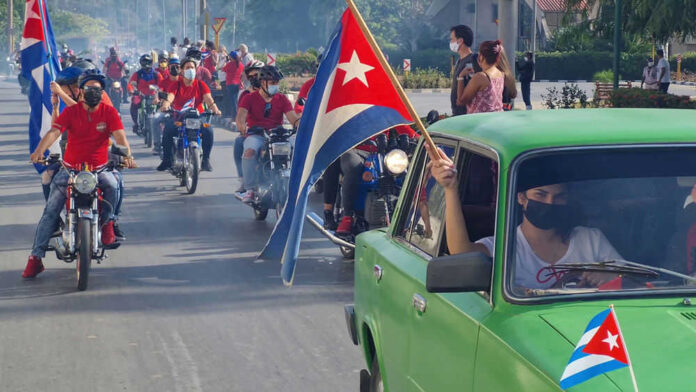
Inside Cuba, the timing of this strategy is no accident. The island is already in one of its worst economic crises since the collapse of the Soviet Union, with industrial and farm output down, food imports slashed, and millions facing growing food insecurity. Rolling blackouts, rising street crime, and a strained health system have shredded the regime’s old image of stability. Since 2020, between one and two million Cubans have fled, many to the United States, draining talent and trust from an already brittle system.
For decades, Havana survived by trading doctors and security help for cheap Venezuelan oil, a deal that cushioned the failures of central planning. As Venezuela’s own collapse cut that support to a trickle, covert shipments still gave Cuba just enough fuel to limp along. Now, with Maduro in U.S. custody and Washington signaling it will not permit those lifelines to continue, Cuba faces deeper energy shock. More blackouts, empty fuel pumps, and crippled transport mean sharper hardship for ordinary Cubans and mounting pressure on a regime that can no longer credibly blame everything on the U.S. embargo.
Trump, Rubio, and the End of the “Cuban Thaw” Illusion
Trump’s second term has effectively buried the bipartisan experiment in gradual normalization pursued under Barack Obama and partly revived by Joe Biden. Instead of small openings and tourism deals that enriched regime-connected elites, the White House has adopted a maximum‑pressure approach: tougher sanctions, energy strangulation through Venezuela, and a public expectation that the dictatorship will collapse from within. Trump has openly said he does not believe a U.S. invasion is necessary, insisting the system is “going down for the count” on its own.
Rubio’s role underscores the domestic political shift. Long a leading Cuba hawk backed by Florida’s exile community, he now shapes policy from the State Department, not just the Senate floor. For conservative voters who watched prior administrations appease Havana while lecturing Americans about “woke” priorities at home, this is a striking reversal: a president using U.S. leverage to challenge a hostile communist state, not to prop it up with hard‑currency tourism and political cover. Yet critics in Congress argue the administration talks a lot about Cuba “falling” without offering a detailed plan for what comes after.
Risks: Collapse, Migration Waves, and Great‑Power Games
Even experts who detest Cuba’s one‑party rule warn that sudden collapse on America’s doorstep carries serious risks. A deeper fuel and food crisis could spark protests, crackdowns, or both, pushing more desperate people onto boats or toward other smuggling routes. Washington might then face exactly what conservatives have long feared: another uncontrolled migration wave driven by a failed socialist state, straining border security, local communities, and already‑battered social programs funded by U.S. taxpayers.
Policy analysts also raise hard questions about “the day after.” Rebuilding a shattered, post‑communist Cuba could require enormous resources and careful choices if it is to become a self‑reliant, free‑market democracy rather than another aid‑dependent ward of Washington. Some warn that mishandling the transition could make Cuba resemble Haiti or turn it into a quasi‑territorial dependency like Puerto Rico, the opposite of the limited‑government, strong‑sovereignty vision conservatives prefer. If the U.S. hesitates, rivals like China or Russia could rush in with cash and influence.
What This Means for American Conservatives
For many on the right, Trump’s pressure campaign answers decades of frustration with a communist regime ninety miles from Florida that jails dissidents while lecturing the world about equality. Ending the flow of subsidized oil exposes the reality that socialism survives only by feeding on others’ resources. At the same time, conservatives must weigh how to prevent a humanitarian disaster from spilling across our borders, even as they reject open‑border demands and insist any support for a future Cuba respects U.S. sovereignty, free markets, and the rule of law.
Sources:
Why Trump’s strike on Venezuela was really about Cuba
Cuba, Trump, Venezuela oil, and the island’s economic crisis
Following Venezuela raid, fears grow of economic collapse in Cuba
Trump’s moves in Venezuela, Cuba, Colombia, and Iran
Will Trump make Cuba the next Haiti or Puerto Rico?
Copyright 2026, LibertySociety.com