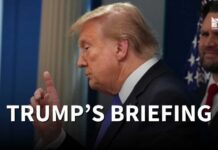

President Trump personally pushed Nvidia’s board to bring back CEO Jensen Huang weeks before Huang must explain an alleged affair with a suspected Chinese spy to Congress.
Quick Take
- Nvidia’s board reinstated Jensen Huang as CEO on November 23, 2026, just 11 days after he resigned.
- Trump said he personally told the board Huang posed no national security threat.
- Huang must testify before House and Senate committees in December about China chip sales and an alleged relationship with a suspected Chinese spy.
- Trump reported buying and selling over a million dollars in Nvidia stock months before Huang’s return.
A Year of Public Appearances Together
Trump and Huang have crossed paths repeatedly since early 2025. Public records show meetings or interactions on January 31, July 10, and July 23, 2025, followed by a September state visit to the United Kingdom and a trip to China in May 2026. Huang also attended a dinner at Al-Yamamah Palace in Riyadh in May 2025, during Trump’s first overseas trip of his second term.
These appearances turned a business relationship into a visible partnership. News outlets began tracking the pattern closely once Huang’s role at Nvidia came under threat late in 2026, treating the string of meetings as part of a larger story about access and influence at the highest levels of government.
Board Reverses Course Under Pressure
Huang stepped down as Nvidia’s chief executive on November 12, 2026, amid reports of a personal scandal. Eleven days later, on November 23, the board voted unanimously to reinstate him. Trump said he urged Nvidia directly to bring Huang back and later took credit for the reversal, framing it as a personal win.
Trump explained his involvement in blunt terms. He said he gave Nvidia’s board “assurances” that Huang did not pose a national security risk, and warned that pushing Huang out could send him to work for China instead. That warning linked Huang’s personal standing directly to broader worries about competition with Beijing over advanced technology.
Chip Exports to China Enter the Picture
The relationship intersects with a major policy shift. On December 8, 2025, the Trump administration announced that Nvidia could sell its advanced H200 chips to approved customers in China. Analysts note the move came with a 25 percent revenue cut built into the deal, turning what had been a strict security rule into something closer to a negotiated trade arrangement.
Researchers who track export policy say this fits a longer pattern. Controls meant to limit China’s access to cutting-edge chips have been adjusted repeatedly, sometimes used more as leverage in trade talks than as a fixed security barrier. That shift raises a basic question shared by both parties in Washington: who decides when national security gives way to commercial interest.
Money and Oversight Questions
Trump’s own financial disclosures add another layer. He reported buying up to $1.6 million and selling up to $1 million in Nvidia stock during the summer of 2026, trades that occurred while the export policy and Huang’s standing were both under discussion. The overlap has drawn attention from lawmakers in both parties scrutinizing the full scope of Trump’s dealings with the company.
Lawmakers Prepare for December Hearings
Huang is set to testify before Congress in early December, with one hearing date reported for December 1. Lawmakers have summoned him to answer questions about his reinstatement, the China chip sales, and an alleged relationship with a woman suspected of spying for China. The hearings arrive fast, leaving little public record so far beyond the board’s own decision and Trump’s public comments.
On Monday, Nvidia welcomed back Jensen Huang as its chief executive, 11 days after he stepped down amid reports of an affair with a businesswoman suspected by American authorities of spying for China.
Nvidia's board had begun an investigation into whether Huang had been the… pic.twitter.com/XxKCJbrr8j
— Sam Szuchan (@szuchans) November 25, 2026
The pending testimony means much of this story is still unfolding. Congress has not yet released findings on the security concerns or on how closely Trump’s intervention shaped the board’s vote, and that record will take shape in the weeks ahead as hearings proceed.
Sources:
youtube.com, usatoday.com, apnews.com, centredaily.com, rmb.reuters.com, thehill.com, embed.businessinsider.com, admiralmarkets.com, edition.cnn.com, bbc.com, cnn.com
© libertysociety.com 2026. All rights reserved.