
(LibertySociety.com) – Russia and China just used the UN veto to block a plan meant to stop Iran from choking off one of the world’s most vital oil-and-aid chokepoints.
Quick Take
- The UN Security Council rejected a Bahrain-backed resolution to bolster security in the Strait of Hormuz after Russia and China vetoed it.
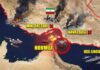
- The strait is described as largely closed, with maritime traffic plunging to about 9 ships in 24 hours compared with roughly 150 on a typical day.
- Supporters said the failed resolution would have improved defensive coordination, including escorted transit and pressure on Iran to stop attacks and interference.
- Opponents argued the text was unbalanced and ignored other military actions in the region, framing it as political rather than stabilizing.
A rare veto with immediate consequences for energy and aid routes
UN diplomats confirmed that a Security Council resolution aimed at improving maritime security in the Strait of Hormuz failed on April 7, 2026, despite winning the support of 11 members. Russia and China vetoed the measure, while Colombia and Pakistan abstained. The draft—submitted by Bahrain alongside several Gulf partners—called for defensive coordination to keep shipping moving and to counter attacks and impediments affecting navigation.
The procedural reality is straightforward: as permanent members, Moscow and Beijing can stop any Council action, even when a broad majority supports it. The political reality is more sobering for anyone who wants predictable rules for global commerce. When the Council cannot even agree on basic protections for international waterways, countries and markets begin to assume that security will be handled through ad hoc coalitions—or not at all.
Why the Strait of Hormuz fight matters to Americans at home
The Strait of Hormuz sits between Iran and Oman and is widely treated as a strategic artery for global energy, with about one-fifth of world oil trade passing through it under normal conditions. Current reports described passage collapsing to single digits per day, a stunning slowdown for a corridor that typically sees around 150 vessels daily. That matters in practical terms because energy and shipping disruptions flow into consumer prices.
For U.S. families already exhausted by years of inflation and high cost-of-living shocks, any sustained restriction in a major chokepoint can become a multiplier. Even if Americans never see “Hormuz” on a gas pump, they feel it through diesel costs, grocery logistics, and higher prices for goods that depend on stable maritime insurance and predictable delivery schedules. Limited information is available on the full duration of the disruption, but the scale of the drop is hard to dismiss.
Competing narratives: maritime law, sovereignty, and “root causes”
Supporters of the resolution—led by Bahrain and backed by the United States and the United Kingdom—framed the vote as a test of whether the UN would defend free navigation against attacks and coercion. U.S. and Gulf officials argued that the strait is too economically vital to be treated as leverage in a regional war. British officials emphasized legal principles around transit passage and signaled additional diplomatic and economic steps.
Russia, China, and Iran described the text as biased and incomplete, saying it focused on Iran while excluding other military actions that, in their view, contribute to escalation. China urged attention to underlying drivers of the crisis, while Russia criticized the draft for what it said was one-sided framing. Iran’s representatives cast the resolution as punishing the wrong party and portrayed its position as tied to sovereignty and security concerns.
When global institutions stall, countries turn to self-defense coalitions
The immediate policy effect of the veto is not just symbolic; it pushes responsibility away from a universal forum and toward smaller groupings of willing states. The UK noted it had convened more than 40 countries in recent days around reopening efforts, underscoring how quickly diplomacy is shifting into “coalition” mode. That model can move faster than the UN, but it also risks uneven enforcement and competing rules.
For conservatives who favor limited, accountable governance, the episode is a reminder that sprawling international institutions often fail the basic competence test when major powers choose gridlock. For many liberals who distrust great-power politics and fear corporate price gouging, the same failure reads as elites playing chess while ordinary people pay the bill. Different diagnoses, same conclusion: the system is struggling to deliver security, stability, and transparency when they are needed most.
What to watch next after the failed vote
The central open question is whether maritime traffic will recover through diplomacy and coordinated escorts, or whether the standoff will harden into a longer shutdown that reshapes trade routes and raises costs. Another indicator will be whether additional countries join UK-led efforts, or whether regional actors attempt more unilateral measures. Public statements also suggest a growing legal argument over navigation rights and what obligations apply under international maritime norms.
The Security Council vote also matters as precedent. A rare veto aimed at a maritime chokepoint security measure signals to markets and adversaries that enforcement may depend more on power blocs than on the UN’s collective authority. For an American public increasingly skeptical that institutions—international or domestic—serve the working and middle class, the episode reinforces a hard truth: when governance becomes theater, voters are left financing the consequences.
Sources:
Security Council: Russia and China veto resolution on Strait of Hormuz
Explanation of Vote on a UN Security Council Resolution on the Situation in the Middle East
Copyright 2026, LibertySociety.com