(LibertySociety.com) – When Vladimir Putin personally oversees a nuclear triad drill coinciding with NATO’s own nuclear exercise, the world watches not for routine, but for the shadow of strategy, what exactly is being signaled when atomic arsenals are tested in tandem?
Story Snapshot
- Putin supervises Russia’s nuclear triad drill as NATO runs a parallel nuclear-deterrence exercise.
- Full participation of Russia’s land, sea, and air nuclear forces under direct presidential command.
- Timing intensifies scrutiny over military signaling and escalation risks between Russia and NATO.
- Experts debate whether the exercise is routine or provocative messaging amid strained East-West relations.
Putin’s Personal Command: Nuclear Readiness on Display
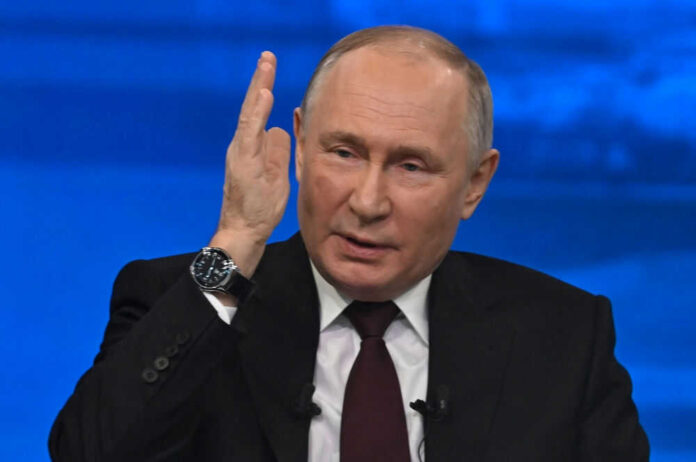
On October 22, 2025, Vladimir Putin stood at the helm of Russia’s massive nuclear drill, a move that combined spectacle with intent. Russia’s nuclear triad, land-based missiles, submarine-launched missiles, and strategic bombers, were all activated in a coordinated exercise designed to test readiness across the entire system. This was not merely a technical rehearsal; it was a deliberate, highly public demonstration of command and control, with Russia’s president directly involved. The presence of top military brass and real-time reporting to Putin underscored the seriousness and authority at play, sending a message both internally and to the outside world.
The exercise unfolded as NATO conducted its own annual nuclear-deterrence drill, drawing immediate comparisons and raising questions about escalation and brinkmanship. Russia’s Ministry of Defense and General Staff worked in concert, while Putin’s involvement signaled the highest level of oversight. The triad drill included the launch of Yars intercontinental ballistic missiles from silos, Sineva missiles from submarines, and air-launched cruise missiles from Tu-95 bombers, covering the full spectrum of strategic capabilities. This convergence of Russian and NATO drills was more than coincidence, it was a calculated alignment of military rhythms, each side watching the other’s moves with acute awareness.
Strategic Signaling: Routine or Provocation?
Russian officials stated the exercise was planned in advance, dismissing any notion that it was a direct response to NATO’s actions. Nonetheless, the timing is striking, and Western analysts view the overlap as intentional signaling, if not outright provocation. This dual posturing revives Cold War-era dynamics, where drills serve not only to maintain operational reliability but also to broadcast strategic resolve. Analysts point out that Russia’s demonstration of its nuclear triad, especially under Putin’s supervision, is designed to deter adversaries and reassure allies, suggesting that deterrence is as much about perception as capability.
NATO, for its part, maintained a cautious stance, refusing to comment directly on Russia’s maneuvers but continuing its own exercise featuring U.S. B-52 bombers and F-35A fighters. The lack of direct incident between the two drills belies the underlying tensions, as intelligence agencies on both sides ramp up monitoring and analysis. The exercises exemplify the adversarial relationship and competitive signaling that define Russia-NATO interactions, with both blocs emphasizing nuclear readiness as central to their security doctrines.
Historical Roots and Escalating Stakes
Russia’s nuclear triad traces its origins to the Cold War, developed to guarantee survivability and retaliatory capability. Regular readiness drills are embedded in Russian military practice, yet their frequency and visibility have increased in recent years as relations with NATO soured, particularly since the 2014 Ukraine crisis. Parallel exercises, such as Russia’s Grom and NATO’s Steadfast Noon, have become annual fixtures, often interpreted as acts of signaling or brinkmanship rather than mere routine.
The immediate impact of these drills is an escalation in tensions and the risk of misinterpretation, a single misstep could have outsized consequences. Longer term, the pattern reinforces hardened doctrines and may accelerate an arms race, undermining already fragile arms control frameworks. The ripple effects extend beyond military circles, influencing political discourse, heightening public anxiety, and prompting shifts in defense spending and procurement. The defense industry and intelligence sectors, in particular, stand to benefit from the uptick in activity, even as policymakers grapple with the diplomatic fallout.
Expert Analysis: Risks, Realities, and American Conservative Perspective
Military experts emphasize the technical complexity and operational significance of full triad exercises, noting that such displays require precise coordination and robust command structures. Analysts warn of strategic signaling inherent in concurrent drills, highlighting the importance of communication to prevent miscalculation. Academic commentators call for renewed arms control dialogue, underscoring the dangers of escalation and erosion of trust.
From an American conservative standpoint, the facts align with a pragmatic view: strength must be met with strength, but not without vigilance and restraint. The Russian drill may be routine in practice, but its timing and leadership involvement are deliberate. The exercise serves Russia’s interests by projecting power and resolve, and it challenges Western policy makers to respond in kind, firmly, but with an eye toward stability and clear communication. The open question remains whether these annual displays will prompt a return to arms control negotiation or cement a new era of strategic competition.
Copyright 2025, LibertySociety.com .