
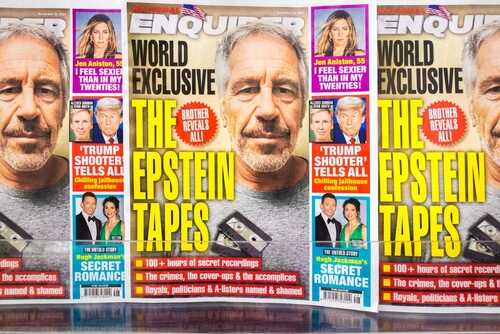
(LibertySociety.com) – One hidden email, one ill-timed defense of a convicted sex offender, and the British government’s most prestigious diplomatic post in Washington collapsed overnight, leaving a power vacuum, a political reckoning, and a lingering question: how deep do the shadows of Jeffrey Epstein truly reach?
Story Snapshot
- The U.K. withdrew Ambassador Peter Mandelson over newly revealed, personal Epstein ties.
- Mandelson’s private defense of Epstein’s 2008 conviction surfaced only after his appointment.
- The government’s swift action signals a new standard for transparency and accountability.
- Diplomatic fallout and intensified scrutiny threaten to expose more than one career.
Emails That Toppled a Diplomat: The Unraveling
On September 11, 2025, the British government yanked its ambassador to the United States, Peter Mandelson, from his post. The catalyst: a tranche of emails, once considered lost to the sands of time, now thrust into the public domain by a relentless House Oversight Committee. These messages, dated and damning, revealed not just a social acquaintance but a deeper, more personal relationship between Mandelson and Jeffrey Epstein, one that included Mandelson’s written assertion that Epstein’s 2008 conviction for soliciting prostitution from a minor was “wrongful” and should be challenged. Unlike the usual sanitized disclosures during diplomatic vetting, this defense had never surfaced, until now.
Media and public outrage was immediate and fierce, with Mandelson’s credibility and judgment called into question. The British Foreign, Commonwealth & Development Office (FCDO) issued a statement confirming his immediate withdrawal, citing the newly uncovered evidence as the sole reason for this decisive action. For a government already under pressure to demonstrate probity in public appointments, there was little room for hesitation.
The Vetting Failure: Political and Ethical Fallout
Ambassadorial appointments are supposed to be bulletproof, scrutinized, dissected, and sanitized for public consumption. Yet, Mandelson’s defense of Epstein’s conviction, tucked away in private correspondence, eluded the vetting process. Prime Minister Keir Starmer, facing mounting criticism, moved quickly to distance his administration from the unfolding scandal. The message was clear: there would be zero tolerance for undisclosed relationships with men whose crimes had sparked global outrage and investigation. This withdrawal was not merely a personnel change; it was an admission of a lapse in transparency and a shot across the bow for anyone tempted to obscure their past associations.
Mandelson, a political heavyweight with a storied Labour Party career, found his reputation in tatters. The vacancy in Washington was not just a diplomatic inconvenience, it was a glaring symbol of the risks that come when due diligence is sacrificed for expedience. For the wider public, especially those who had watched the Epstein saga metastasize across continents and institutions, the episode underscored a persistent question: who else, and what else, remains hidden?
The Epstein Effect: Lasting Ripples in Diplomacy and Power
Epstein’s shadow stretches long across the Atlantic. His 2008 conviction, and later death in 2019, triggered investigations that have ensnared politicians, business leaders, and now, diplomats. Mandelson’s abrupt fall is not the first, Prince Andrew’s public reckoning offered a recent and royal reminder of how associations with Epstein can end careers and stain legacies. The current episode adds fuel to the fire, suggesting that even the highest offices are not immune from the consequences of past relationships.
The British government’s rapid response aims to restore public trust, but the damage is more than reputational. With the ambassadorial seat vacant at a critical juncture in U.K.-U.S. relations, seasoned observers are watching for signs of further revelations. The House Oversight Committee’s document dump may be the beginning, not the end, of this diplomatic housecleaning. For those in the corridors of power, the lesson is stark: transparency is no longer optional, and today’s undisclosed friendship could be tomorrow’s front-page scandal.
Transparency, Accountability, and the Road Ahead
The Mandelson episode has already changed the calculus for public office. Heightened vetting, more aggressive disclosure requirements, and a culture of accountability are now the price of entry for diplomatic appointments. Ethics experts and political analysts alike point to this event as a watershed, a moment when the old rules of plausible deniability gave way to a new demand for total disclosure.
What remains to be seen is whether this moment of reckoning will be fleeting or foundational. As media and political scrutiny intensifies, the potential for further exposures looms large. The British government, for its part, has signaled a willingness to act decisively, but the question lingers: can the system truly prevent the next diplomatic debacle, or will history repeat itself as new names and new secrets come to light?
Copyright 2025, LibertySociety.com .