
(LibertySociety.com) – How could a midair collision involving a commercial jet and a military helicopter happen in one of the nation’s most controlled airspaces?
Story Snapshot
- The collision involved American Airlines Flight 5342 and a U.S. Army Black Hawk helicopter.
- 67 lives were lost in the catastrophic crash.
- Equipment malfunction and air traffic control failures are under scrutiny.
- Calls for reforms in aviation safety protocols have intensified.
Catastrophic Collision: The Harrowing Details
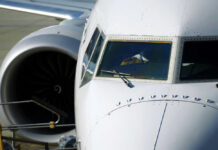
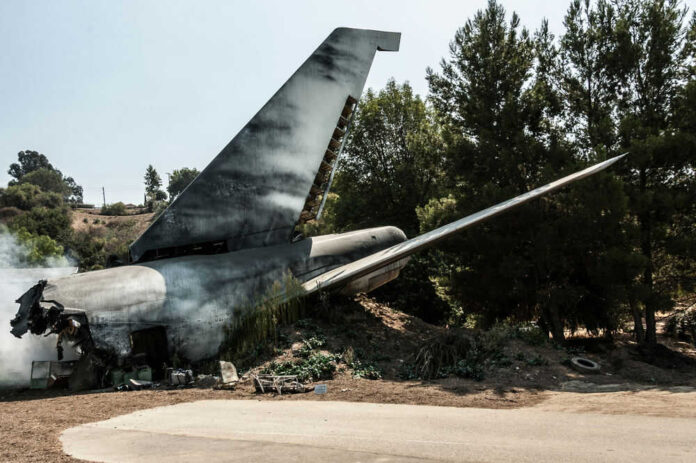
The tragic collision occurred on January 29, 2025, near Washington Reagan National Airport. American Airlines Flight 5342, a commercial jet, was on its final approach to the runway when it collided with a U.S. Army Black Hawk helicopter. The crash resulted in one aircraft being reduced to ash, while only the tail and one wing of the other remained. The incident claimed 67 lives and has since raised serious questions about aviation safety and airspace management.
A National Transportation Safety Board (NTSB) investigation quickly began, with the focus on potential air traffic control failures and equipment malfunctions. Surveillance footage released by the NTSB on August 2, 2025, offered a detailed look at the crash sequence, further intensifying public scrutiny and calls for accountability.
Complex Airspace: A Recipe for Disaster?
Washington Reagan National Airport operates within a challenging airspace, shared by both civilian and military aircraft. Historically, it has managed to handle the complex coordination demands, but this incident has highlighted potential flaws. The increased frequency of military training flights in the DC area, coupled with reported altimeter discrepancies in Black Hawk helicopters, have raised critical concerns. Test flights revealed consistent 100-foot errors in Black Hawk altimeters, adding another layer of complexity to an already precarious situation.
Efforts to upgrade older UH-60L Black Hawk models to the newer UH-60M standards have been ongoing, but this tragedy may accelerate those plans. As the investigation continues, the need for improved communication and equipment upgrades in shared airspace environments has become glaringly apparent.
The Human Cost and Emotional Toll
The loss of 67 lives has left a deep wound in the hearts of victims’ families and communities. Airlines and military authorities now face mounting pressure to restore public trust by ensuring operational safety. Families directly affected by this tragedy demand accountability and support in overcoming their grief.
The Federal Aviation Administration (FAA) and the U.S. Army have issued joint statements pledging their cooperation in the ongoing investigation. These efforts aim to identify the root causes of the collision and implement measures to prevent such a catastrophe from happening again.
Expert Opinions: What Needs to Change
Aviation safety experts are advocating for an overhaul of airspace management protocols. They emphasize the importance of addressing altimeter discrepancies and outdated equipment. The NTSB’s findings have been backed by multiple sources, reinforcing the call for systemic reforms and technological investments to enhance safety.
Debate continues over whether equipment malfunction or human error played a more significant role in the collision. While some experts assert that technical fixes are paramount, others argue for broader reforms to address systemic issues. As the investigation progresses, the focus remains on preventing future tragedies and ensuring a safer aviation environment.
Copyright 2025, LibertySociety.com .