(LibertySociety.com) – As legacy outlets double down on spin, Vice President J.D. Vance is openly calling out the “fake news media” and exposing how they warped the truth about Trump, 2024, and the new America First agenda.
Story Snapshot
- Vance is turning Trump’s “fake news” charge into a sustained, vice-presidential campaign against biased legacy media.
- His “real vs. fake” language links dishonest coverage to deeper problems in the political and economic elite.
- Mainstream outlets respond with fact-checks and scolding editorials, proving they feel the pressure.
- For conservatives burned by years of slanted reporting, Vance’s pushback channels long-building frustration.
Vance’s Broadsides Against A Media Americans No Longer Trust
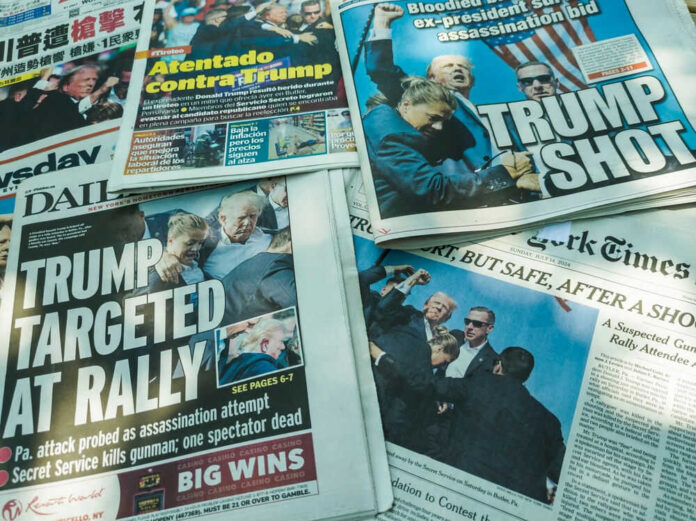
Vice President J.D. Vance’s clashes with the press are not one-off viral moments; they are part of a deliberate campaign to brand hostile coverage as “fake news media” and force a reckoning over credibility. Research on his rhetoric shows he has embraced “fake” as a go-to label for legacy outlets, unfavorable polling, and political opponents, extending the media skepticism President Trump pioneered into the new administration’s daily messaging. That framing matches how many conservative voters already view the press.
Political reporting traces how Vance sharpened this language over several years, turning “fake” into a simple, powerful shorthand for institutions that lecture working families while protecting their own power. As Trump’s 2024 running mate and now as vice president, he applies that label when the press ignores border chaos, downplays inflation, or blames ordinary Americans for elite policy failures. Supporters see these confrontations as overdue accountability for outlets that spent years pushing Russia hoaxes and burying stories that hurt Democrats.
From “Hillbilly Elegy” Author To Trump’s Most Relentless Media Critic
Vance’s evolution from bestselling author to national populist figure helps explain why his attacks on the press hit a nerve. Early in his career, he often spoke like a coastal commentator trying to explain “flyover country” to liberal audiences. Over time, he concluded those same institutions were misrepresenting the people he grew up with. By the 2024 campaign, he was using “fake” not just as an insult but as a framework: fake stories, fake narratives, fake polls, and a fake concern for the working class coming from the same media class that cheered lockdowns and open borders.
Commentary critical of Vance admits that his choice of words tracks closely with Trump’s original “fake news” assault on legacy brands, but insists it is an unfair attack on journalistic integrity. That pushback only reinforces what many conservatives already suspect: the national media can dish it out but cannot take serious scrutiny in return. When outlets devote entire segments to “fact-checking” Vance’s tone while quietly correcting their own errors on immigration, crime, or cultural issues, it underscores the double standard he is exposing.
“Real Versus Fake”: Tying Media Corruption To A Rigged Economy
Analysts following Vance’s speeches note that his “fake news media” line is only one piece of a broader “real versus fake” argument. In that narrative, the same people who run cable panels and newspaper editorial boards also cheer on a “fake economy” built on financial speculation, politicized tech platforms, and credentialed bureaucracy, while scorning the real work done in factories, energy fields, farms, and logistics. By linking media bias to this wider system, he tells voters their anger is not just emotional; it is grounded in how the game is stacked.
That linkage matters for conservatives who watched the old establishment sell globalization, forever wars, and unrestrained migration as inevitable, then label dissent as bigotry or ignorance. When Vance calls out the “fake news media,” he is implicitly calling out the larger network of think tanks, corporations, and political operatives that relied on sympathetic coverage to keep bad policies in place. For an America First base that just powered Trump back into the White House, that message helps explain why secure borders, energy dominance, and deregulation were treated as fringe ideas by the very people now demanding deference.
Media Fact-Checks, Hoaxes, And The Battle Over Who Gets To Define Reality
Legacy outlets have not taken Vance’s assault on their credibility quietly. High-profile programs have aired segments dissecting his comments on political violence and other controversies, insisting they are correcting falsehoods while rejecting the “fake news media” label. At the same time, academic experts studying conspiracy theories have documented how stray comments by national leaders, including Vance, get folded into social media hoaxes—evidence that trust is so low many Americans no longer accept any official narrative at face value.
For conservatives, this moment is a double-edged warning. On one side, the hoaxes and rumors show how decades of media dishonesty and one-sided reporting have shattered confidence in any shared information source. On the other, the aggressive “fact-check” machinery demonstrates that many journalists would rather police speech than reckon with why half the country believes they are biased. Vance’s willingness to say “fake news media” from the vice-presidential podium signals that the Trump administration understands this frustration and does not intend to surrender narrative power back to the same institutions that misled Americans about Russia, COVID, and the border.
Sources:
The real reason J.D. Vance calls everything ‘fake’ – Politico Nightly
Expert on conspiracy theories explains latest national hoax – University of Cincinnati
JD Vance’s ‘fifty shades of lies’ – Baptist News Global
J.D. Vance at Turning Point’s AmericaFest – WBUR/NPR
Morning Joe fact-checks J.D. Vance’s false statements – MSNBC
Copyright 2026, LibertySociety.com