(LibertySociety.com) – Iran’s relentless march toward nuclear weapons capability threatens to ignite a Middle East arms race that could shatter decades of non-proliferation efforts and embolden terrorist proxies targeting American interests.
Story Snapshot
- Iran has enriched uranium to 60% purity with enough material for multiple warheads despite US-Israeli strikes on nuclear facilities
- February 2026 offensive eliminated Supreme Leader Ali Khamenei but failed to destroy Iran’s nuclear infrastructure
- Saudi Arabia vows to pursue nuclear weapons if Iran acquires them, risking regional proliferation cascade
- IAEA monitoring access lost after 2025 strikes, leaving uncertainty about Iran’s reconstitution timeline
Iran’s Nuclear Capabilities Survive Military Strikes
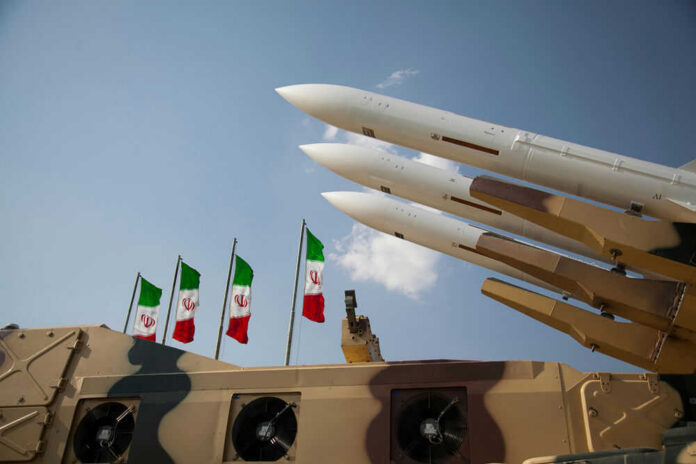
Iran has enriched uranium to 60% purity, positioning the regime dangerously close to weapons-grade material needed for nuclear warheads. Despite coordinated US-Israeli strikes in June 2025 targeting the Natanz, Isfahan, and Fordow facilities, followed by a February 2026 offensive that killed Supreme Leader Ali Khamenei, Iran’s nuclear infrastructure remains resilient. Intelligence assessments indicate the regime possesses sufficient enriched uranium for multiple warheads, with advanced missile delivery systems capable of reaching Israel and US bases throughout the Middle East. The strikes damaged but did not eliminate Iran’s nuclear capability.
Monitoring Blackout Creates Dangerous Uncertainty
The International Atomic Energy Agency lost all monitoring access to Iran’s nuclear sites following the 2025 military strikes, creating a dangerous intelligence vacuum. Without IAEA inspectors on the ground, Western nations cannot verify the extent of damage to Iran’s nuclear program or track reconstitution efforts. Probabilistic models from the Institute for Science and International Security suggest rising odds of Iranian nuclear breakout absent verifiable cessation of enrichment activities. This monitoring blackout allows Iran’s new hardline Supreme Leader Mojtaba Khamenei to pursue weapons development shielded from international scrutiny, undermining any diplomatic solutions.
Regional Proliferation Cascade Threatens Stability
Saudi Crown Prince Mohammed bin Salman has publicly vowed to match any Iranian nuclear capability, setting the stage for a Middle East arms race that could collapse the entire non-proliferation regime. Chatham House analysts warn that Turkey and other regional powers may follow suit if Iran acquires nuclear weapons, particularly given doubts about American security guarantees under fluctuating administrations. This proliferation cascade would transform the world’s most volatile region into a multi-power nuclear flashpoint. The scenario represents exactly what the Nuclear Non-Proliferation Treaty was designed to prevent, yet decades of failed diplomacy and insufficient enforcement have brought it to reality.
Regime Survival Drives Nuclear Ambitions
Iran’s leadership views nuclear weapons as essential for regime survival against what it perceives as existential threats from Israel and the United States. The Islamic Revolutionary Guard Corps has prioritized nuclear development alongside regional proxy operations through Hezbollah, Hamas, and Houthi forces. Despite Ali Khamenei’s previous religious fatwa against nuclear weapons, voices within the regime now openly advocate withdrawing from the Nuclear Non-Proliferation Treaty and pursuing bomb development. The 2018 US withdrawal from the Joint Comprehensive Plan of Action eliminated the last diplomatic constraints on Iran’s program, allowing enrichment violations that accumulated weapons-grade material while international enforcement mechanisms failed.
Failed Strikes Expose Limited Military Options
The coordinated US-Israeli military campaigns in 2025 and 2026 demonstrate the limitations of kinetic action against hardened and distributed nuclear facilities. While the February 2026 offensive achieved the strategic objective of eliminating Ali Khamenei, damage assessments confirm only limited destruction of nuclear infrastructure. Iran’s deliberate strategy of dispersing facilities across multiple sites, many buried deep underground, ensures program continuity even after devastating strikes. Iranian retaliation against US bases in Iraq and Qatar following the June 2025 strikes illustrates the regime’s capacity for asymmetric response, raising costs for future military action while nuclear reconstitution proceeds.
Posture Review of the World’s Nuclear Powers – A Nuclear Iran Would Be a Major Threat
READ: https://t.co/zvgg5pzitZ pic.twitter.com/Pzrv0iZ4j6
— The Gateway Pundit (@gatewaypundit) April 23, 2026
The convergence of Iran’s nuclear ambitions with broader geopolitical instability—including New START treaty expiration, Chinese arsenal expansion, and Russian aggression in Ukraine—signals a fundamental breakdown in global non-proliferation architecture. American policymakers face increasingly constrained options as diplomatic engagement has failed, military strikes prove insufficient, and economic sanctions cannot prevent a regime that views nuclear weapons as its ultimate insurance policy. The question is no longer whether Iran will pursue nuclear weapons, but whether the international community can prevent the resulting arms race from destabilizing an entire region already plagued by proxy wars and sectarian conflict that threatens American interests and allies alike.
Sources:
Iran War Risks Triggering New Wave Nuclear Proliferation – Chatham House
What Are Iran’s Nuclear and Missile Capabilities – Council on Foreign Relations
Iran Nuclear Overview – Nuclear Threat Initiative
Iranian Nuclear Threat: Why It Matters – Anti-Defamation League
Copyright 2026, LibertySociety.com