(LibertySociety.com) – Iran is daring Americans into a ground war—exactly the kind of open-ended conflict MAGA voters were promised would never happen again.
Story Snapshot
- Iran’s parliament speaker warned Iranian forces are ready to “rain fire” on U.S. troops if American boots hit the ground.
- Reports of U.S. naval deployments, including the USS Tripoli carrying roughly 3,500 personnel, are fueling speculation about raids or ground missions.
- President Trump issued fresh escalation threats tied to a deal involving the Strait of Hormuz, while Tehran denies U.S. claims of “regime change” progress.
- Regional flashpoints are multiplying, including threats to universities and shipping choke points, raising the risk of a broader war.
Iran’s “Rain Fire” Warning Meets a U.S. Military Buildup
Iranian parliamentary speaker Mohammad Bagher Ghalibaf escalated the rhetoric by saying Iranian forces are “waiting for the arrival of the American soldiers on the ground to rain fire on them,” framing Washington as pretending to negotiate while planning invasion. The statement landed as U.S. forces surged assets into the region and as the U.S.-Israel air campaign entered its fifth week. The immediate question for Americans is whether this buildup stays naval and aerial—or turns into ground combat.
U.S. posture changes are not theoretical. Reports cited the arrival of the amphibious assault ship USS Tripoli with about 3,500 personnel, alongside other naval movements, as analysts weighed the possibility of ship-to-shore missions. Some reporting described Pentagon preparations consistent with raids or limited ground operations, with repeated mention of Iran’s Kharg Island—an oil-export hub that would be strategically significant in any attempt to pressure Tehran’s energy revenue.
Trump’s Ultimatums, Hormuz Pressure, and a Base That’s Splitting
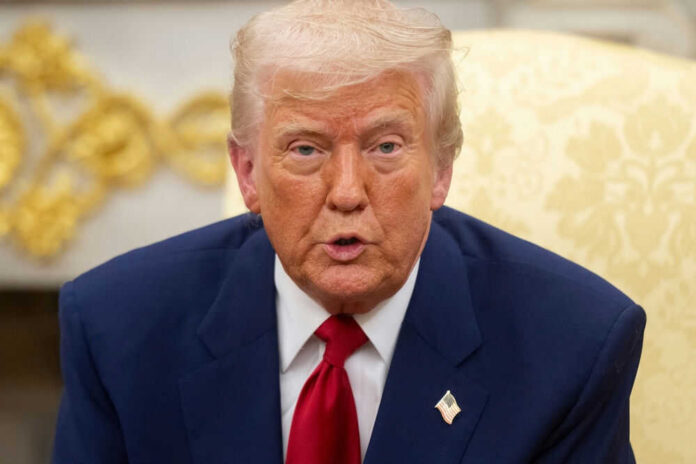
President Trump publicly mixed deal talk with blunt warnings, threatening wider attacks on Iran’s critical infrastructure if Tehran does not accept terms tied to the Strait of Hormuz. In the same news cycle, U.S. statements suggesting progress toward “regime change” or a “new” negotiating partner were rejected by Iranian officials. That contradiction matters politically at home: many Trump voters backed a second term expecting border control, lower costs, and fewer foreign entanglements—not a drift into another Middle East war.
Within the MAGA coalition, the tension is becoming harder to ignore. Some voters instinctively support Israel and favor maximum pressure on Tehran; others argue that “America First” means no new nation-building, no new ground wars, and no blank-check commitments that drive up energy prices. The administration now owns the consequences of escalation decisions, including higher risk to U.S. service members, the potential for expanded surveillance and emergency authorities, and the familiar Washington temptation to keep widening objectives once fighting starts.
From Airstrikes to Spillover: Universities, Proxies, and Regional Targets
Regional spillover risks grew as strikes reportedly hit Iranian infrastructure, including electrical facilities connected to blackouts, while Tehran and aligned actors threatened a wider set of targets. Reporting also described rockets striking near Baghdad’s airport and retaliatory messaging tied to attacks on universities, with threats expanding to institutions across the region. One concrete example was the American University of Beirut shifting to online operations amid the threat environment, showing how quickly “far away” conflict ripples into civilian life.
Chokepoints and Costs: Hormuz, Bab el-Mandeb, and Energy Shockwaves
The most immediate pocketbook risk for Americans is disruption to shipping lanes and energy flows. Reporting referenced threats around the Strait of Hormuz and also the Bab el-Mandeb chokepoint, where Houthi involvement could widen the crisis beyond Iran’s coastline. Even limited interference can spike insurance rates, delay cargo, and tighten global oil supply—pressures that often flow straight into U.S. fuel and grocery costs. For voters already burned by years of inflation, this is the wrong direction.
What We Know, What’s Still Unclear, and the Constitutional Stakes
Multiple outlets reported the same core Iranian threat language and confirmed heightened U.S. deployments, but claims about an imminent American ground invasion remain unproven based on the available public information. That uncertainty is exactly why transparency matters: if escalation moves from air and sea to ground operations, Americans deserve clarity on mission scope, objectives, and legal authority. When wars expand without clear limits, history shows “temporary” emergency measures can become lasting government overreach.
Iran Threatens to 'Rain Fire' on US Troops if Ground Invasion Begins. pic.twitter.com/ivxiGsmouq
— BERLI MEDIA (@Berlimedia0) March 30, 2026
For conservatives watching this unfold, the key is to separate verified deployments and statements from speculation, while demanding accountability on the one decision that cannot be undone: putting U.S. troops into a ground fight. Iran’s message is that it wants Americans to believe a landing equals a bloodbath. The White House message is that pressure will force a deal. Between those lines sits the same question voters have asked for two decades—what’s the exit plan?
Sources:
Iran warns US over ‘boots on the ground’ reports
Iran warns US over ‘boots on the ground’ reports
Copyright 2026, LibertySociety.com