(LibertySociety.com) – Federal Reserve data reveals tariffs imposed during 2025 prevented inflation from returning to the rock-bottom rates Americans enjoyed before the pandemic, keeping prices stubbornly above target despite years of economic adjustment.
Story Snapshot
- Federal Reserve reports link 2025 tariffs to elevated goods prices, blocking full disinflation
- PCE inflation ended 2025 at 2.6-2.9%, well above pre-pandemic levels of 1.2-1.5%
- FOMC projections show inflation persisting above the Fed’s 2% target through year-end
- Consumers face higher import costs while services inflation returns to pre-pandemic pace
Tariffs Stall America’s Return to Price Stability
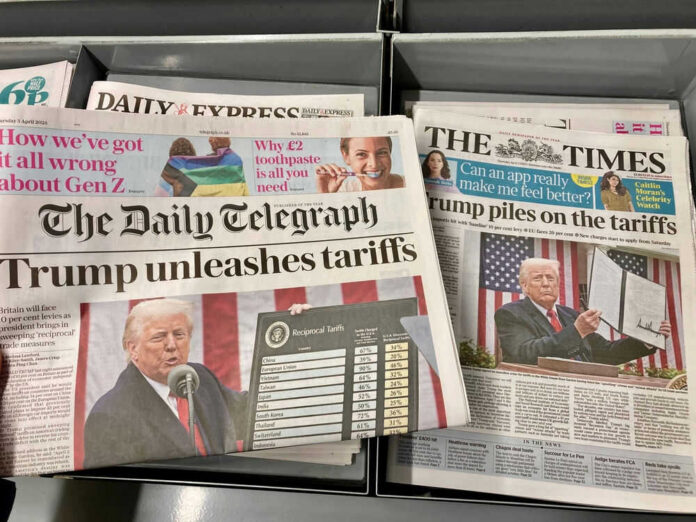
The Federal Reserve’s June 2025 Monetary Policy Report explicitly identified tariffs as a key factor pushing goods prices higher, even as overall inflation showed signs of easing. By December 2025, the Federal Open Market Committee projected the year’s median Personal Consumption Expenditures inflation at 2.9 percent, with ranges extending to 3.2 percent. This stands in stark contrast to the 1.2 to 1.5 percent inflation Americans experienced in the years before COVID-19 disrupted the economy. While services inflation returned close to pre-pandemic rates, import-heavy goods sectors bore the brunt of tariff-related price hikes, delaying the return to stable, predictable costs for families.
The Fed’s Struggle to Meet Its Own Benchmarks
Federal Reserve officials have maintained a 2 percent inflation target since 2012, a benchmark designed to balance price stability with economic growth. Yet by August 2025, PCE inflation measured 2.7 percent, described by the St. Louis Fed as “moderately but persistently above target.” April 2025 offered a brief glimpse of progress, with PCE dropping to 2.1 percent, but tariffs reversed momentum on imported goods. The Bureau of Labor Statistics confirmed year-end 2025 consumer price index figures at 2.7 percent, mirroring the stubbornness of elevated costs. This persistent overshoot raises concerns among everyday Americans who remember the stability of the 2010s, when inflation averaged well below 2 percent for years on end.
Consumers and Workers Bear the Cost
Tariffs may protect certain domestic industries, but they impose a hidden tax on American households through higher prices on everyday goods. The Fed’s analysis shows consumers faced elevated costs on imports throughout 2025, eroding purchasing power even as wages struggled to keep pace. This dynamic hits hardest those living paycheck to paycheck, who spend a larger share of income on necessities. Manufacturers reliant on imported components also face squeeze, complicating the promise of tariff-driven reshoring. The political calculus behind trade policy may favor protection, but the economic reality is simple: tariffs act as a barrier between Americans and the affordable living costs they experienced before the pandemic, a fact the Federal Reserve’s own data makes clear.
Uncertain Path Ahead for Monetary Policy
Federal Reserve projections extend the inflation struggle through 2028, with median forecasts eventually reaching the 2 percent target but upper ranges lingering at 2.5 percent. The central bank faces a dilemma: tighten policy to combat tariff-driven inflation and risk slowing growth, or tolerate above-target prices and risk unmooring public expectations. Research from the Boston Fed notes that while inflation expectations surged in early 2025, they avoided the destabilizing spirals of the 1970s, offering limited reassurance. Yet the longer inflation stays elevated, the harder it becomes to convince Americans that stable prices will return. Policymakers’ choices in the coming years will determine whether tariffs represent a temporary speed bump or a permanent barrier to the low-inflation prosperity the nation once took for granted.
Sources:
Federal Reserve – Summary of Economic Projections, December 2025
St. Louis Fed – Is the U.S. in an Above-Target Inflation Regime?
Boston Fed – Why Have Inflation Expectations Surged Recently?
Federal Reserve – Monetary Policy Report, June 2025
Federal Reserve – FEDS Working Paper on Inflation Targeting
New York Fed – Inflation Expectations Survey, February 2025
Chicago Fed – Household Inflation Forecasting Accuracy
Bureau of Labor Statistics – Consumer Price Index 2025 in Review
U.S. Inflation Calculator – Current Inflation Rates
Copyright 2026, LibertySociety.com