

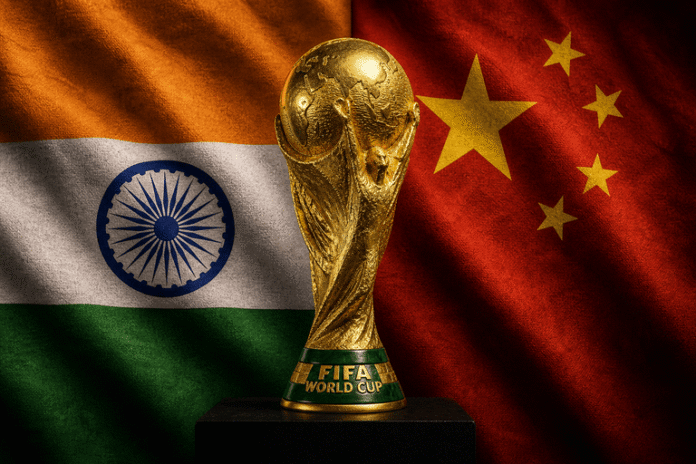
(LibertySociety.com) – Billions of soccer fans in India and China face a blackout of the 2026 FIFA World Cup with just weeks remaining before kickoff, as FIFA’s global broadcasting empire crumbles in the world’s most populous nations.
Story Snapshot
- India and China lack official broadcasters for the 2026 World Cup despite FIFA slashing rights prices from $100 million to $35 million
- Only 14 of 104 matches start before midnight in India, with the final kicking off at 12:30 am, making commercial broadcasts unprofitable
- Nearly 2.8 billion potential viewers could be shut out as major broadcasters reject the deal, exposing FIFA’s failure to serve global audiences
- JioStar offered just $20 million for India rights while waiting for a last-minute bargain, highlighting corporate gamesmanship over fan access
FIFA’s Broadcasting Collapse in Asia’s Giants
FIFA slashed broadcasting rights prices for India from $100 million to $35 million, yet the 2026 World Cup remains without coverage in India and China as of early May 2026. The tournament begins June 11 across the United States, Canada, and Mexico with an expanded 48-team, 104-match format. Despite representing nearly 2.8 billion potential viewers, both nations appear on FIFA’s official broadcaster list as “TBA” with no confirmed deals. This crisis exposes a fundamental disconnect between FIFA’s commercial ambitions and the reality of serving fans in mismatched time zones.
Unfavorable Timings Sink Commercial Viability
The tournament’s North American schedule creates insurmountable problems for Asian broadcasters. Only 14 of 104 matches start before midnight Indian Standard Time, with the July 19 final kicking off at 12:30 am. Industry insiders confirm these late-night slots devastate advertising revenue potential, as viewership plummets when matches air during sleeping hours. Viacom18, now JioStar, paid $62 million for the 2022 Qatar World Cup, which featured fan-friendly Asian timings. The dramatic pricing collapse from $100 million to $35 million for 2026 rights reflects broadcasters’ recognition that expanded formats mean expanded losses when audiences cannot watch.
Corporate Standoff Leaves Fans Stranded
JioStar, the dominant Indian sports broadcaster controlled by Reliance, reportedly offered only $20 million for rights FIFA values at $35 million. Industry sources indicate JioStar anticipates securing a last-minute deal at the “right price,” leveraging FIFA’s desperation as kickoff approaches. This corporate brinkmanship prioritizes profit margins over serving millions of soccer enthusiasts. Doordarshan, India’s public broadcaster, could provide fallback coverage but requires a private partner under India’s mandatory sharing law for major sporting events. The stalemate illustrates how broadcasting deals serve corporate interests rather than the fans who built the sport’s global popularity.
Broader Implications for Global Sports Access
This broadcasting crisis sets a troubling precedent for future World Cups scheduled for 2030 and 2034, potentially forcing FIFA to subsidize coverage or accept regional blackouts. The expanded 104-match format, designed to maximize FIFA revenue through more games, backfires spectacularly when time zone realities make half the world unwatchable markets. Other Asian nations including Malaysia, Thailand, Vietnam, and Sri Lanka also lack confirmed broadcasters, revealing systemic failures in FIFA’s commercial strategy. Meanwhile, FIFA claims “successful” media rights sales elsewhere in Asia without acknowledging the India-China debacle, suggesting an organization more concerned with public relations than ensuring the world’s game remains accessible worldwide.
The standoff between FIFA and Asian broadcasters exposes deeper problems with how international sports organizations operate. FIFA expanded the tournament format to increase revenue but failed to account for how geography affects viewership and commercial value. Ordinary fans pay the price when billion-dollar negotiations stall over profit margins, while wealthy executives on both sides play chicken with public access to the world’s most-watched sporting event. Whether last-minute deals materialize or billions face a World Cup blackout, this crisis demonstrates how distant bureaucrats and corporate dealmakers have become from the people whose passion sustains global soccer.
Sources:
104 matches, 0 broadcasters: Why no one in India wants the 2026 FIFA World Cup
2026 FIFA World Cup broadcasting rights
Successful FIFA World Cup 2026 media rights sales Asia
Copyright 2026, LibertySociety.com