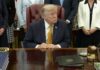
(LibertySociety.com) – Democrats’ decision to sit stone-faced as a murdered young woman’s grieving mother was honored on live national television has become the defining flashpoint of Trump’s 2026 State of the Union.
Story Snapshot
- President Trump honored Anya Zarutska in the House chamber while recounting the killing of her 23-year-old daughter, Iryna, on Charlotte’s Blue Line light rail.
- Many Republicans stood for a sustained ovation while many Democrats remained seated, prompting Trump’s on-mic rebuke: “How do you not stand?”
- Records show the accused killer, DeCarlos Brown Jr., had 14 prior arrests and was released after later arrests in 2024 and 2025 before the fatal attack.
- Trump inaccurately linked the suspect to “open borders,” but reporting indicates Brown is an American citizen—an important correction amid the immigration debate.
A SOTU Moment That Exposed a National Divide on Crime and Respect
President Donald Trump used his Feb. 25, 2026, State of the Union address to honor Anya Zarutska, whose daughter Iryna Zarutska—a 23-year-old Ukrainian refugee—was killed in Charlotte, North Carolina. The tribute turned into a political flashpoint when many Democratic lawmakers did not rise during the recognition, while Republicans stood and applauded. Trump publicly challenged the optics from the podium, pressing lawmakers on why they would not stand for a grieving mother.
The substance of Trump’s message focused on public safety: how a violent offender ends up back on the street, and what government owes law-abiding families who pay the price when the system fails. For conservative viewers, the moment landed as a referendum on priorities—whether leaders can separate basic human decency for a victim’s family from partisan reflex. The visual contrast inside the chamber amplified the broader national argument about crime, accountability, and consequences.
What the Charlotte Case Shows About Repeat-Offender Failures
Iryna Zarutska was fatally stabbed on Aug. 22, 2025, on the Blue Line light rail in Charlotte, in an attack captured on security video that circulated widely. DeCarlos Brown Jr. was charged in the killing, and reporting describes a long history of criminal activity and mental health issues, including 14 prior arrests. After his 2021 release from prison, Brown was arrested again in 2024 and 2025 for misuse of 911, and judges released him both times before the fatal incident.
North Carolina lawmakers responded with “Iryna’s Law,” which took effect in December 2025. The reporting describes reforms that tighten pretrial release standards and require judges to consider full criminal histories—an approach conservatives often argue is common sense when repeat arrests signal escalating risk. The case underscores a practical tension inside criminal justice: when courts prioritize rapid release, communities may absorb the danger, while victims’ families carry permanent loss that cannot be reversed by later statements or reforms.
Immigration Talking Points Collided With a Key Factual Correction
Trump’s remarks also pulled the tragedy into the wider immigration fight, but a central claim did not match the available records. During the address, Trump said Brown “entered the country through open borders,” yet reporting indicates Brown is an American citizen. That distinction matters because immigration failures and bail/pretrial failures are separate policy problems. Blending them may energize talking points, but it can also muddy solutions—especially for voters who want clean, accurate accountability and reforms that actually prevent the next attack.
Democrats’ Pushback Focused on “Politicization,” Not the Underlying Record
Democratic criticism in the immediate aftermath centered on the argument that Trump was “using a tragedy” to advance a narrative, with Rep. Ilhan Omar accusing the president of fueling xenophobia. Other Democratic concerns referenced in coverage include mental health and social service gaps. Those issues are real policy debates, but the documented timeline still leaves an uncomfortable question: how a suspect with a lengthy arrest history and recent releases was not contained before a lethal incident occurred on public transit.
What Happens Next: Justice, Reform, and the Limits of Symbolic Gestures
The criminal case against Brown remains pending in the justice system, and publicly available reporting in the provided sources does not include a trial date or final outcome. Trump promised Anya Zarutska justice, but the practical test will be whether prosecution and sentencing deliver clarity, and whether reforms like Iryna’s Law change courtroom decisions in repeat-offender cases. For many conservative Americans, the larger lesson is simple: sympathy is cheap; policy and enforcement are what protect families.
The evil showed their true self.
'How Do You Not Stand?!' Trump Calls Out Democrats for Refusing to Honor Sobbing Mother of Iryna Zarutska During SOTU (VIDEO) | The Gateway Pundit | by Cassandra MacDonald https://t.co/6se6lV9944— Ken Kmak @ken_kmak8542 (@ken_kmak8542) February 25, 2026
Politically, the SOTU episode is likely to endure because it combined emotion, policy, and a made-for-TV contrast in a single frame. Supporters will point to the standing ovation as solidarity with victims and a demand for order, while opponents will argue the moment was orchestrated. What is not in dispute is the underlying tragedy, the suspect’s documented history, and the reality that public safety debates now hinge on whether government institutions prioritize the rights of peaceful citizens over the revolving door that too often favors repeat offenders.
Sources:
President Donald Trump addresses Charlotte crime in State of the Union speech
Trump recounts violent, gory stories
Copyright 2026, LibertySociety.com