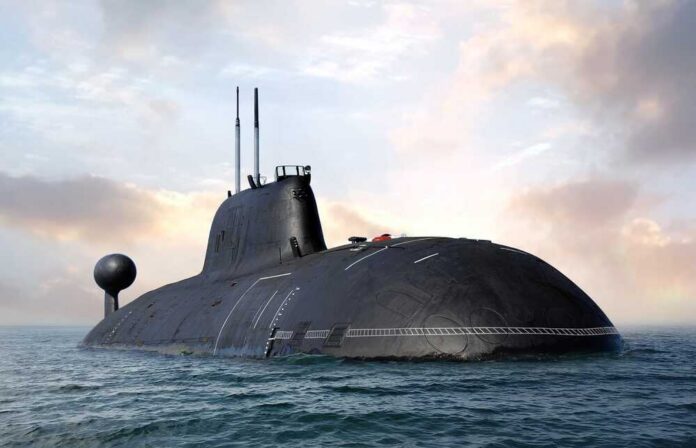
(LibertySociety.com) – Sweden’s revolutionary Blekinge-class submarine proves American naval superiority doesn’t require nuclear power, delivering stealth capabilities that challenge China and Russia while exposing decades of Pentagon overspending on bloated nuclear sub programs.
Story Highlights
- Sweden’s A26 Blekinge-class achieves 45-day submerged endurance using advanced air-independent propulsion, rivaling nuclear submarines without the massive costs
- Stirling engine technology enables “ghost” stealth across acoustic, magnetic, and electric signatures, with proven capability to “sink” US carriers in exercises
- Poland selects three A26 submarines to replace Soviet-era vessels, strengthening NATO’s Baltic deterrence against Russian aggression from Kaliningrad
- Project delays and cost overruns balloon budget to $2.3 billion, yet still far cheaper than America’s multi-billion-dollar nuclear submarine programs
Game-Changing Stealth Without Nuclear Bloat
Sweden’s A26 Blekinge-class submarine represents a triumph of efficiency over government waste. Saab Kockums designed this 66-meter vessel to operate submerged for 18 days using Stirling air-independent propulsion, burning diesel and liquid oxygen to generate silent electric power. Total endurance reaches 45 days, matching nuclear submarines in operational capability without reactor complexity. The Royal Swedish Navy ordered two vessels in 2015, with first delivery now scheduled for 2031. Defense analysts confirm the submarine achieves ultra-low signatures across acoustic, magnetic, electric, hydrodynamic, and radar spectra, earning its “ghost” designation through engineering excellence rather than massive taxpayer spending.
Proven Combat Effectiveness Against American Forces
Sweden’s earlier Gotland-class submarine demonstrated devastating effectiveness during 2005 war games, repeatedly “sinking” the USS Ronald Reagan carrier strike group. US Navy commanders could not detect the diesel-electric vessel despite deploying full anti-submarine warfare assets. This humiliating performance validated Sweden’s Stirling AIP technology, first introduced in the 1980s as the world’s pioneering air-independent propulsion system. The A26 advances this proven concept with enhanced multi-mission capabilities including a specialized portal for deploying unmanned underwater vehicles and special forces operators. This modular approach enables seabed warfare operations critical for countering Russian undersea infrastructure threats, a capability Pentagon planners now recognize as essential for modern naval conflict.
NATO Strengthens Baltic Defense Against Russian Threats
Poland’s selection of three A26 submarines directly addresses Russian military expansion from Kaliningrad, the heavily militarized exclave threatening NATO’s northeastern flank. The Polish Navy will replace outdated Soviet-era Kilo-class vessels with modern Swedish technology optimized for shallow Baltic Sea operations where nuclear submarines struggle. Sweden’s 2024 NATO accession transformed the Baltic into a “NATO lake” requiring interoperable assets for coordinated defense. The A26’s small crew of 17-50 personnel, compact 1,930-ton displacement, and four 533mm torpedo tubes provide flexible deterrence against larger adversaries. Defense experts confirm these specifications suit littoral warfare far better than America’s massive nuclear boats designed for deep-ocean patrols.
Budget Mismanagement Plagues Swedish Defense Industry
Sweden’s Defense Materiel Administration renegotiated the A26 contract in October 2025, tripling costs from initial 8.4 billion Swedish kronor to 25 billion kronor, approximately $2.3 billion total. Delivery schedules slipped dramatically from original 2022-2024 targets to 2031-2035, reflecting typical government procurement failures. Analysts blame unrealistic initial budgets, supply chain disruptions, and Kockums shipyard deterioration after decades without new submarine construction. The Södermanland-class vessels requiring replacement will retire in the 2030s, creating potential capability gaps. Despite these bureaucratic failures mirroring Pentagon waste on smaller scale, the final A26 cost remains fractional compared to America’s $3-4 billion Virginia-class nuclear submarines, demonstrating how focused engineering beats government bloat.
Export Success Validates Swedish Defense Innovation
Saab Kockums markets the A26 as the “world’s first 5th-generation submarine,” integrating digital systems and multi-domain interoperability that parallel fighter aircraft generational advances. The company offers variants from 1,000 to 3,000-plus tons for littoral through blue-water operations, targeting export markets beyond Poland. Defense industry experts confirm the submarine’s Multi-Mission Portal, precision strike capabilities, and UUV integration represent genuine technological leadership in non-nuclear submarine design. Sweden’s neutral Cold War heritage produced innovative diesel-electric solutions emphasizing stealth over brute force, contrasting with Soviet and American nuclear-focused doctrines. This smart approach prioritizes mission effectiveness and taxpayer value, principles American defense procurement desperately needs as federal debt exceeds $36 trillion largely from decades of military overspending.
Sources:
A26 Blekinge-Class Submarine Analysis – H.I. Sutton
Poland to Buy Advanced New A26 Submarines From Sweden – The War Zone
Sweden Submarine Capabilities – Nuclear Threat Initiative
Sweden Can Build Killer Submarine: Why Can’t Europe Build Real Navy? – The National Interest
Solving Sweden’s Submarine Woes – Corporal Frisk
5th Generation Submarine – Saab
Copyright 2026, LibertySociety.com