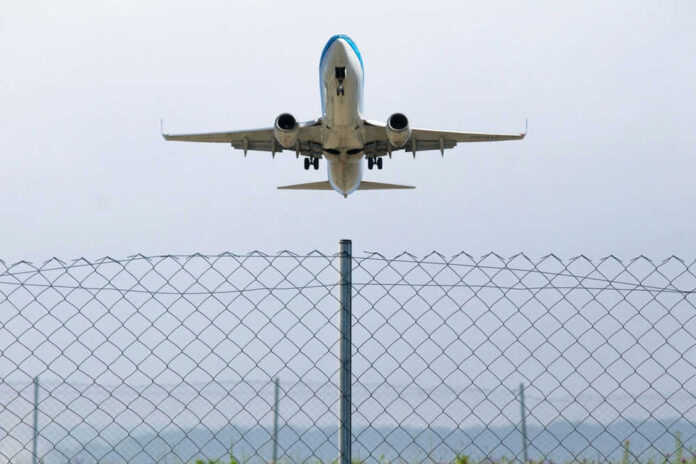
(LibertySociety.com) – America’s longest commercial flight ban in the Western Hemisphere isn’t caused by war or weather, it’s gangs wielding drones and rifles in Haiti’s capital, upending aviation safety and redefining what “no-fly” really means.
Story Snapshot
- FAA has extended its prohibition of U.S. commercial flights to Port-au-Prince until March 2026 due to escalating gang violence and security risks.
- Over 90% of Haiti’s capital is controlled by gangs, whose use of drones and small arms presents unique threats to aviation.
- The U.S. designation of Haitian gang coalitions as foreign terrorist organizations marks a sharp escalation in international response.
- The ban severely impacts travel, commerce, humanitarian aid, and the legitimacy of Haiti’s government.
Gangs Redefine Aviation Risk in Port-au-Prince
Federal aviation officials did not choose to extend the U.S. flight ban to Haiti’s capital lightly. Since late 2023, heavily armed gangs have launched coordinated assaults on government infrastructure, forcing the closure of Toussaint Louverture International Airport for nearly three months. In November 2023, a Spirit Airlines flight landing in Port-au-Prince became a harrowing example, gang gunfire wounded a flight attendant and damaged other aircraft, a direct attack on international aviation that changed the calculus for American authorities.
Spirit Airlines’ ordeal was not isolated. The Viv Ansanm coalition, among other gangs, now controls most of Port-au-Prince and its key transit routes. Their arsenal has evolved: reports detail the use of not just small arms but drones, a threat previously reserved for war zones. The FAA’s September 2025 extension of its ban to March 7, 2026, reflects these evolving tactics and the inability of local authorities to guarantee even basic airport security. For the first time, the intersection of organized crime, modern technology, and national security has grounded U.S. flights for years on end.
From Political Collapse to Aviation Shutdown
Haiti’s descent into chaos did not happen overnight. Chronic instability and weak governance have plagued the country for decades, but the 2021 assassination of President Jovenel Moïse created a power vacuum that gangs rushed to fill. By 2024, criminal organizations had seized control of critical infrastructure, ports, highways, and airports, effectively paralyzing state functions and rendering governmental authority nearly symbolic.
The Viv Ansanm coalition’s rise exemplifies this shift. Their orchestrated attacks forced the closure of the capital’s airport, a move that signaled to both Haitians and the international community that criminal groups now set the rules. The U.S. responded by designating these gangs as foreign terrorist organizations in May 2024, a label that brings new tools for international cooperation but also confirms the severity of the crisis. Yet, even as the airport reopened, violence persisted, and the FAA’s hand was forced: no U.S. commercial flights could safely navigate airspace where gangs wield drones and rifles just beyond the runway fences.
Impact: Isolation, Economic Decline, and Precedent
The consequences of this extended flight ban reverberate far beyond the tarmac. Immediate effects include the disruption of travel between the U.S. and Haiti, complicating everything from family reunions to humanitarian aid. Local businesses and international NGOs now face logistical nightmares, while the Haitian diaspora struggles to support relatives cut off from direct travel and remittances.
Long-term, Haiti risks deeper isolation and economic decline. As U.S. airlines lose access to a regional partner, international confidence in Haiti’s stability plummets. Aid organizations encounter new hurdles, and the government’s legitimacy erodes further. The aviation industry itself faces a sobering precedent: bans driven not by state actors or natural disasters, but by non-state criminal groups wielding consumer-grade technology and firepower. This is a wake-up call for global aviation security protocols everywhere gangs or militias threaten critical infrastructure.
Expert Analysis: Security, Humanitarian Fallout, and the Limits of Control
Aviation security experts warn that gangs’ access to drones and firearms creates threats that traditional airport defenses cannot easily counter. Political analysts draw direct lines between Haiti’s state collapse and the rise of non-state actors capable of disrupting international aviation, once unthinkable in the Americas. Humanitarian organizations argue that the ban compounds Haiti’s isolation, making relief efforts more dangerous and less effective.
Divergent opinions surface on whether the ban itself helps or hurts Haiti. Some cite safety as paramount: with gangs controlling runways and approaches, commercial flights risk catastrophe. Others caution that cutting off travel may only embolden criminal groups, further destabilizing a nation already on the brink. What is clear: the FAA’s action is informed by hard facts and a conservative approach to passenger safety, not diplomatic optimism or economic expediency. In Port-au-Prince, the skies are closed until the ground is secure, and that remains a distant hope.
Copyright 2025, LibertySociety.com .