
(LibertySociety.com) – One presidential tirade, a fractured central bank, and a nation’s economic future teetering on the edge, this is not your typical day at the Federal Reserve.
Story Snapshot
- President Trump publicly lambastes Fed Chair Jerome Powell after the central bank freezes interest rates for the fifth straight meeting.
- The Federal Reserve Board reveals rare internal dissent, with two governors breaking ranks to demand rate cuts.
- Trump’s tariffs and persistent inflation fuel the standoff, raising alarm bells over central bank independence.
- Political pressure and economic uncertainty collide, rattling markets and testing the resilience of monetary policy.
Trump’s Outburst and the Fed’s Stalemate: A Clash Years in the Making
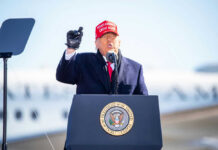
Donald Trump has never shied from picking a fight, but his latest volley against Federal Reserve Chair Jerome Powell landed with the force of a thunderclap. After the Fed’s July 2025 decision to hold interest rates steady at 4.25%–4.50%, for a remarkable fifth consecutive meeting, Trump unleashed a tirade, branding Powell “too political,” “too angry,” and, with surgical bluntness, “too stupid.” His outrage wasn’t just bluster; it targeted what he saw as a central bank stifling growth and costing Americans “trillions” in lost opportunity. The public spectacle was immediately felt on Wall Street, where investors, already jittery from months of inflation and tariff-induced uncertainty, braced for the next shoe to drop.
The fireworks didn’t end with Trump’s words. For the first time since 1993, two governors on the Federal Reserve Board, both Republican appointees, formally dissented, demanding a rate cut. Their split with the majority sent a clear signal: beneath the Fed’s stoic exterior, pressure is mounting. The central bank, designed as a fortress against political interference, now finds itself at the epicenter of a political and economic maelstrom.
The Tariff Trap: How Trade Wars Handcuffed Monetary Policy
The context for the Fed’s paralysis is as important as the personalities involved. The U.S. economy, despite moderate growth and low unemployment, remains gripped by stubborn inflation. Powell’s team, wary of unleashing another wave of price hikes, has repeatedly cited Trump’s new tariffs as a key driver of inflation. Every time a new tariff is announced, the cost of imported goods edges up, squeezing consumers and complicating the Fed’s calculus. The central bank’s “wait-and-see” approach, painful for borrowers hoping for relief, reflects this new reality, where monetary policy and trade policy are locked in a dangerous tango.
Within the Fed, the debate is fierce. The two dissenting governors, Michelle Bowman and Christopher Waller, argue that cutting rates now would jumpstart growth and send a reassuring signal to markets. Yet Powell and the majority remain unmoved, unwilling to risk another inflation spiral. Their message is clear: until inflation shows signs of retreating below the 2% target, and until the full effects of tariffs are clearer, the Fed will keep its powder dry.
Institutional Independence Under Fire: Can the Fed Hold the Line?
The public feud between Trump and Powell is more than a battle of personalities; it’s a test of the very foundations of American economic policy. For over a century, the Fed’s independence has been sacrosanct, insulating monetary policy from the whims of politics. Trump’s relentless pressure, echoed by some House Republicans who floated the prospect of firing Powell, has set a dangerous precedent. While Trump has said he isn’t planning to remove Powell, his public musings and private draft letter suggest the idea is far from dead.
Powell, for his part, has refused to blink. In his terse post-meeting remarks, he pointed directly at tariffs and inflation as the rationale for caution, declining to promise a rate cut in September. The implication is unmistakable: until the data shifts, policy will not. But the internal dissent, unprecedented since the early 1990s, raises the specter of a future Fed that is more divided, and perhaps more vulnerable to political interference, than ever before.
High Stakes for Markets, Borrowers, and the Public
The immediate fallout from this standoff is uncertainty, everywhere. Financial markets, always allergic to unpredictability, now face the twin risks of monetary policy paralysis and political meddling. Bond and equity markets have already shown signs of volatility as investors parse every word from both the White House and the Fed. For everyday Americans, the consequences are tangible: mortgage rates, credit card interest, and business loans all hinge on the Fed’s next move.
Beyond the numbers, the social and political stakes are climbing. Inflation bites hardest at the lower end of the income scale, eroding purchasing power and deepening economic anxiety. Meanwhile, the spectacle of a president berating a central banker is likely to become a campaign issue, further politicizing the institution at the heart of the world’s largest economy.
Expert Analysis: Independence or Instability?
Most economists have backed the Fed’s cautious approach, warning that premature easing could reignite inflation and imperil recovery. Market analysts, for their part, worry that continued political interference might erode confidence in the Fed, and by extension, the stability of U.S. financial markets. Academic observers point to history: when central banks succumb to political pressure, the long-term consequences are almost always negative, higher inflation, reduced credibility, and, ultimately, slower growth.
Trump’s supporters counter that aggressive rate cuts are the antidote to both tariffs and sluggish growth. But critics warn that tying monetary policy to political fortunes is a recipe for instability. As the nation heads toward the next election cycle, all eyes are on the Fed: Will it hold the line, or bend under pressure? The answer may shape the American economy for years to come.
Copyright 2025, LibertySociety.com .